Why Modern Businesses Are Trading Cat5e for Cat6a Cabling
Discover why upgrading to Cat6a is essential for modern business tech, from 10G speeds to high-power PoE for security and AV systems.
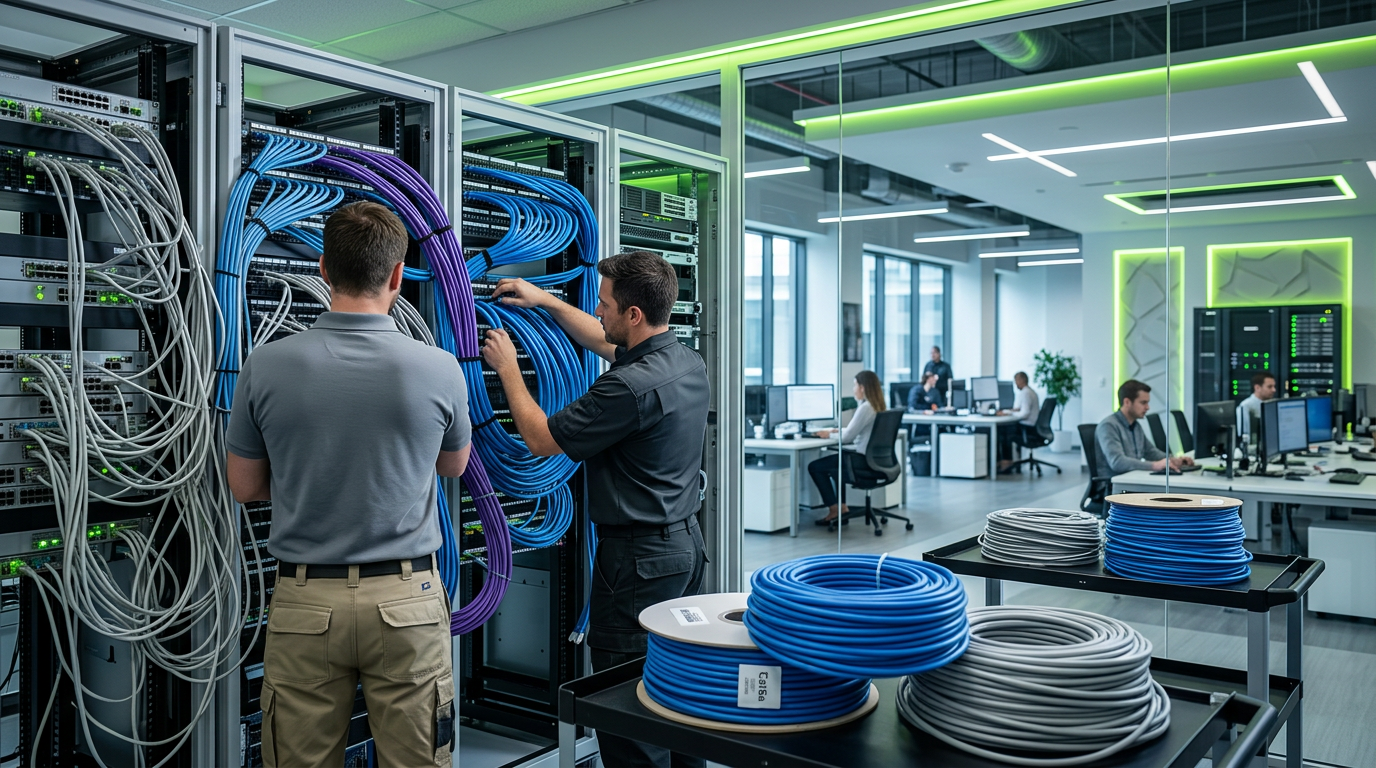
In the world of commercial infrastructure, the cables running through your walls and ceilings are the literal central nervous system of your business. For over two decades, Category 5e (Cat5e) has been the reliable workhorse of the industry. However, as business technology evolves, Cat5e is increasingly becoming a bottleneck that hinders growth and reliability.
At InCTRL Technology Services, we are seeing a significant shift across Central Florida as retail, hospitality, and corporate clients move toward Cat6a (Category 6 Augmented). Here is why this upgrade has moved from a luxury to a necessity for modern commercial operations.
The Speed and Bandwidth Gap
The most immediate difference between these two standards is raw performance. Cat5e was designed to support speeds up to 1 Gigabit per second (Gbps) at a frequency of 100 MHz. While this was sufficient for basic office internet in 2010, today’s applications demand more.
Cat6a supports data rates of up to 10 Gbps over the full 100-meter cable length and operates at frequencies up to 500 MHz. This tenfold increase in speed is critical for:
- Server-to-Server communication: Reducing latency in data centers and server rooms.
- Cloud Computing: Ensuring that high-speed fiber internet connections aren't throttled by local copper wiring.
- Large File Transfers: Essential for design firms, healthcare facilities handling high-res imaging, and media production.
Power over Ethernet (PoE) Demands
Modern businesses no longer just use cabling for data; they use it for power. Power over Ethernet (PoE) allows a single cable to provide both a data connection and electrical power to devices like security cameras, VoIP phones, and wireless access points.
As devices become more advanced—such as 4K PTZ security cameras or high-performance Wi-Fi 6/6E access points—they require more wattage (PoE+ and PoE++).
Because Cat6a uses a thicker gauge wire (typically 23 AWG) compared to Cat5e, it handles the heat generated by higher power loads much more efficiently. This reduces the risk of performance degradation and ensures your high-end hardware operates at peak capacity without overheating the cable bundles.
Future-Proofing for Wi-Fi 6 and Beyond
Wireless technology is only as fast as the wires feeding the access points. The latest Wi-Fi standards, including Wi-Fi 6 (802.11ax) and Wi-Fi 7, are capable of speeds exceeding 5 Gbps.
If you install a state-of-the-art Wi-Fi 6 system on an old Cat5e backbone, you are effectively putting a speed limit on your wireless network. Cat6a provides the necessary headroom to ensure that your investment in wireless technology isn't wasted by a physical infrastructure that can’t keep up.
Eliminating Crosstalk and Interference
In a commercial environment—especially in warehouses or large corporate offices—cables are often packed tightly into trays and conduits. This proximity can lead to Alien Crosstalk (AXT), where signals from one cable interfere with another.
Cat6a is specifically engineered to combat this. It features tighter twists in the copper pairs and often includes internal separators (splines) or shielding. This superior insulation ensures that your data remains clean and error-free, even in environments with high electromagnetic interference, such as near heavy machinery or large LED signage displays.
Supporting Digital Signage and AV
At InCTRL, we integrate a significant amount of Digital Signage and Audio-Visual equipment. Modern AV-over-IP solutions, which transmit high-definition video over standard network cabling, have high bandwidth requirements.
To run a 4K video matrix across a hospitality venue or a corporate campus without lag or compression artifacts, Cat6a is the industry-standard recommendation. It provides the stability needed for synchronized displays and high-fidelity audio distribution.
Is it Time for an Upgrade?
While Cat5e may still work for basic legacy systems, it is reaching its end-of-life in terms of scalability. Upgrading to Cat6a is a long-term investment that protects your infrastructure for the next 10 to 15 years.
When planning a renovation or a new build-out, consider these three factors:
1. Device Density: How many devices will be on your network in five years?
2. Power Requirements: Are you planning to install high-definition security or smart lighting?
3. Construction Costs: It is significantly more cost-effective to pull Cat6a once than to re-cable your entire facility in three years when your network fails to meet demand.
By prioritizing high-quality structured cabling now, you ensure that your business remains agile, secure, and ready for whatever technological shifts come next.
---
Planning a project like this? See our [structured cabling services](/services/structured-cabling) or [get a free site assessment](/contact) from InCTRL's Orlando team.
InCTRL Technology Team
Commercial integration specialists with 20+ years installing security, cabling, signage, AV and IT systems across Central Florida. About us
Explore our services
Areas we serve
Need This Done at Your Facility?
Orlando-based since 2004 — 3,300+ jobs completed. Talk to a real technician, not a call center.