TIA-606 Cable Labeling: Why Unlabeled Runs Cost Florida Facilities Money
How TIA-606 labeling and as-built records cut troubleshooting time, protect warranties, and keep moves, adds, and changes predictable in commercial buildings.
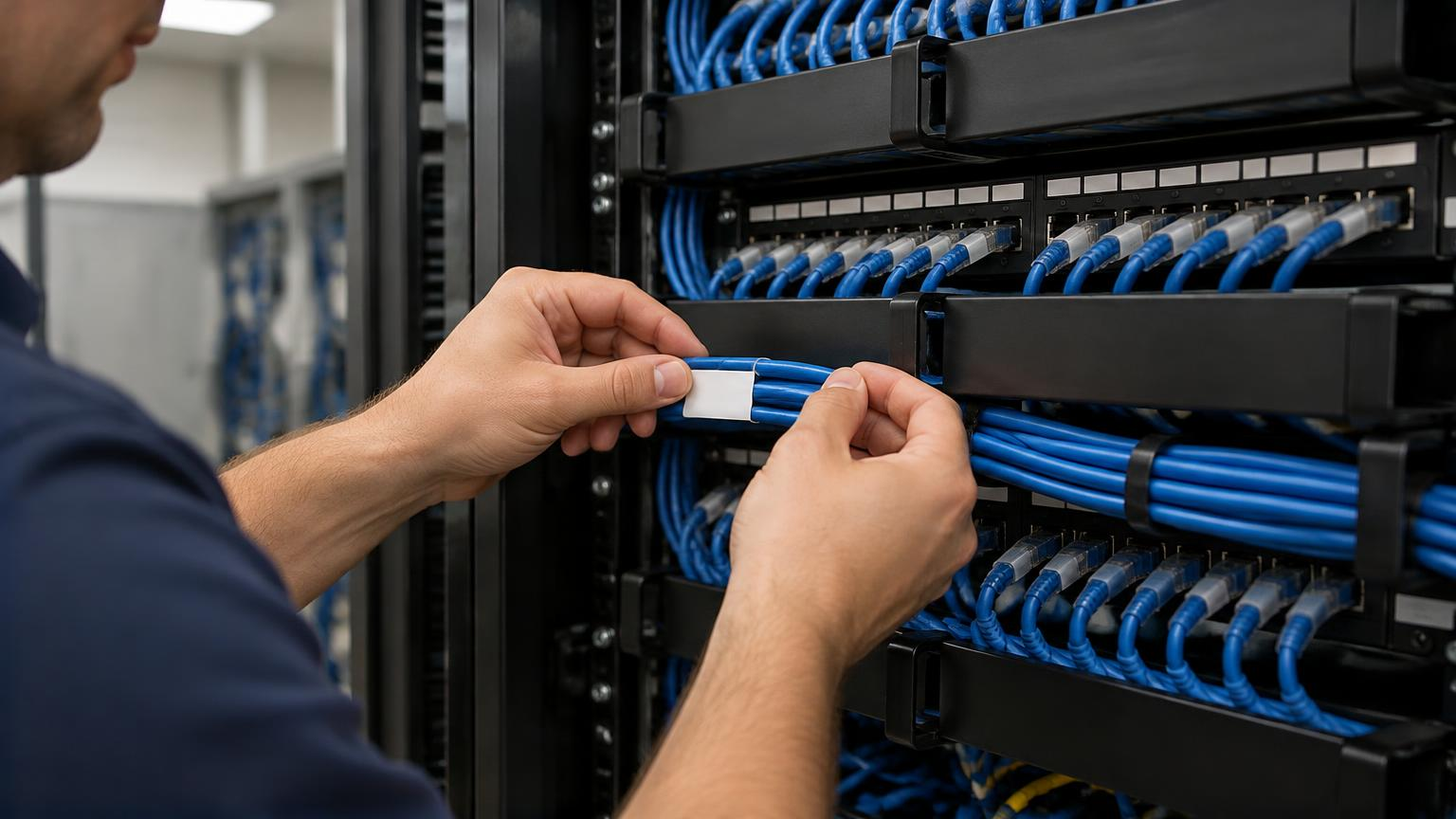
A cabling system without labels and records works only until the first outage, tenant move, or audit. The ANSI/TIA-606 administration standard gives every cable, port, rack, and pathway a unique identifier that matches both ends of the run and the drawings. For offices, clinics, hotels, and retail sites in Florida, that consistency turns a two-hour hunt with a toner into a five-minute fix.
Quick Facts
- Standard: ANSI/TIA-606 defines identifiers for telecom spaces, racks, patch panels, ports, cables, and pathways.
- Both ends: Each horizontal cable is labeled within a few inches of the jack and at the patch panel, using the same identifier.
- Durability: Labels should be printed, self-laminating, or sleeve-style, never handwritten tape that fades in hot ceiling spaces.
- Records: Labels mean little without an as-built drawing and port schedule that match them.
- Warranty: Manufacturer system warranties typically require documented, tested, and labeled links.
What a Usable Identifier Looks Like
A common TIA-606 style format reads like 1A-B12-24: floor 1, telecom room A, patch panel B12, port 24. The same string appears on the wall plate, on the cable jacket at both ends, and in the port schedule. Anyone on site can trace a problem without opening the ceiling.
| Element | Example | Where It Appears |
|---|---|---|
| Telecom space | 1A | Room door, drawings |
| Rack / cabinet | 1A-R02 | Top of rack |
| Patch panel | 1A-B12 | Panel face |
| Port / link | 1A-B12-24 | Jack, panel, both cable ends |
| Pathway | 1A-PW03 | Sleeves, cable tray |
Where Unlabeled Systems Lose Money
- Troubleshooting time: Field techs bill by the hour. Untraced cables can add one to three hours per service call.
- Tenant improvements: When walls move, unmapped runs get abandoned instead of reused, and new cable gets pulled.
- Abandoned cable: Unknown runs left in plenum spaces add fuel load and complicate future work.
- Security and POS gaps: PCI-DSS and camera system reviews are harder when nobody can say which port feeds which device.
Labeling on New Installs vs. Existing Buildings
New installs: Labeling, testing, and documentation should be in the scope from day one. Ask for printed labels at both ends, a port schedule in a spreadsheet, test reports per link, and marked-up floor plans at closeout.
Existing buildings: A remediation project traces and tests every active port, removes or tags abandoned runs, relabels to a single scheme, and produces the records the building never had. Phasing it by telecom room keeps the business running.
What to Request From Your Cabling Contractor
1. A written labeling scheme approved before the first cable is pulled.
2. Machine-printed labels rated for the environment.
3. Certification test results tied to each link identifier.
4. As-built drawings and a port schedule delivered at closeout.
5. Clear exclusions for areas that cannot be accessed or traced.
The Bottom Line
Labeling is the cheapest part of a structured cabling project and the part most often skipped. Getting it right once protects every future service call, tenant move, and warranty claim.
InCTRL Technology Services installs, tests, and documents structured cabling for commercial facilities across Central Florida. [Request a cabling assessment](/contact) to review your building's current records.
InCTRL Technology Team
Commercial integration specialists with 20+ years installing security, cabling, signage, AV and IT systems across Central Florida. About us
Explore our services
Areas we serve
Need This Done at Your Facility?
Orlando-based since 2004 — 3,300+ jobs completed. Talk to a real technician, not a call center.