Smart Stadiums: How Cabling Powers the Modern Fan Experience
Discover how structured cabling and NDAA-compliant security transform Central Florida stadiums into high-capacity digital hubs for fans and operators.
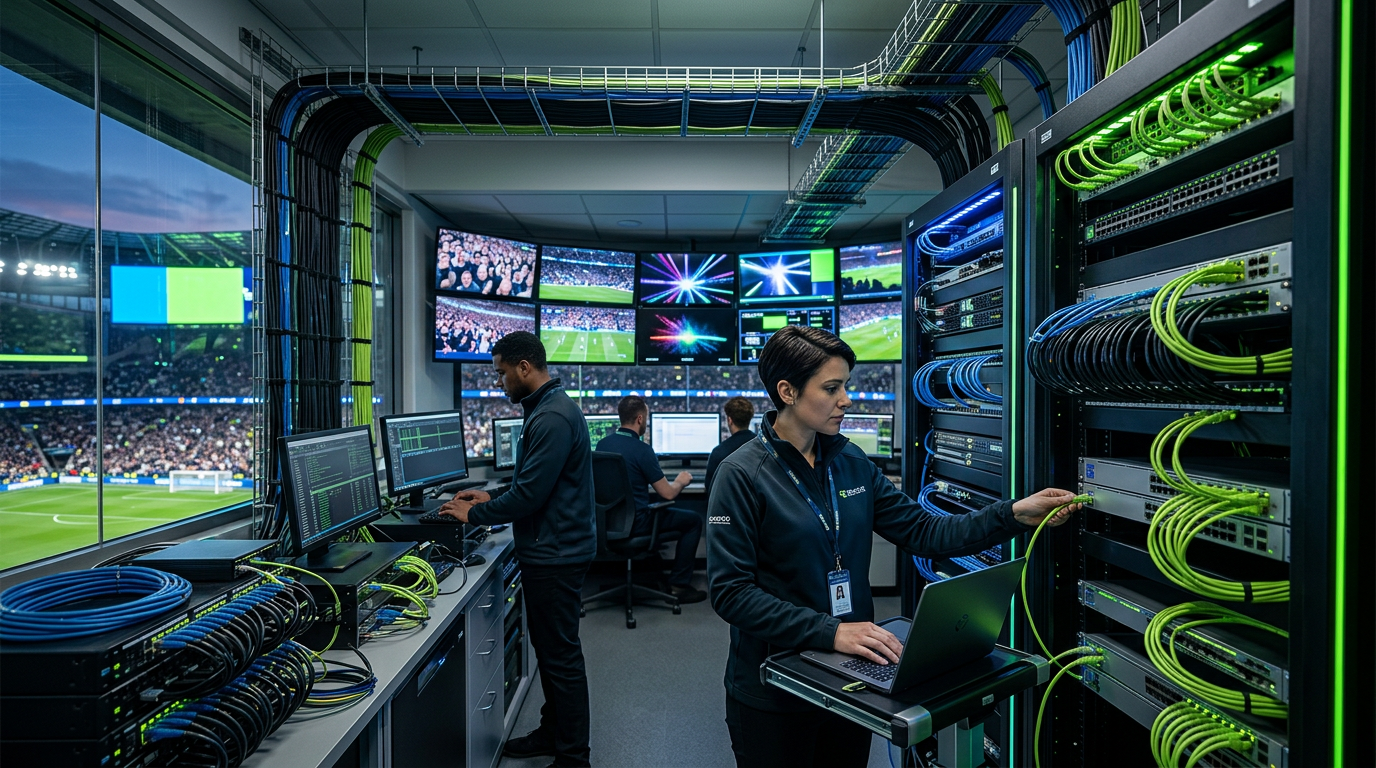
Imagine 65,000 fans simultaneously attempting to upload 4K video of a game-winning touchdown while ordering concessions via a mobile app and checking real-time player stats on high-definition digital signage. In a modern stadium environment, this isn't a luxury—it’s the baseline expectation.
Behind every seamless replay and high-speed Wi-Fi connection lies a sophisticated web of structured cabling. In Central Florida’s growing sports and entertainment landscape, the shift toward "Smart Stadiums" is fundamentally changing how venues are designed, secured, and operated.
The Backbone of High-Capacity Connectivity
A stadium is essentially a small city that comes to life for four hours at a time. To support high-density environments, the traditional approach to wiring no longer suffices. Modern venues are moving toward a Fiber-to-the-Edge architecture.
By pushing fiber optics closer to the end-user—whether that’s a Point of Sale (POS) system in a luxury suite or a high-definition digital scoreboard—venues can minimize latency and maximize bandwidth. Category 6A (Cat6A) copper cabling remains the standard for horizontal runs, providing the 10-Gigabit speeds necessary to support the latest Wi-Fi 6E and Wi-Fi 7 access points.
Security and Compliance: The NDAA Shift
As stadiums become more technologically integrated, they also become more vulnerable. Security is no longer just about turnstiles and guards; it’s about encrypted data streams and compliant hardware.
With the upcoming 2026 shifts in the National Defense Authorization Act (NDAA), stadium operators are under increased pressure to ensure their surveillance ecosystems are compliant. Section 889 of the NDAA prohibits the use of specific telecommunications and video surveillance equipment from manufacturers like Hikvision and Dahua.
For major venues that often host government-adjacent events or partner with multinational corporations, non-compliance is a significant liability. Transitioning to NDAA-compliant hardware ensures that site maps, facial recognition data, and sensitive crowd-control imagery remain secure from foreign interference.
Digital Signage and Fan Engagement
Digital signage in a smart stadium does more than show the score. It acts as a dynamic revenue generator and a safety tool. Through structured cabling, these displays can:
- Dynamic Wayfinding: Direct fans to shorter concession lines or the nearest exit during an emergency.
- IPTV Integration: Deliver lag-free, high-definition content to hundreds of screens simultaneously.
- Emergency Alerts: Instantly override all content with safety protocols synced with the building’s fire and life safety systems.
Cost vs. Value: The Investment Reality
Building or retrofitting a stadium-scale network is a significant capital expenditure. However, the cost of an undersized system—characterized by dropped connections and disgruntled fans—is much higher in the long run.
| Investment Tier | Est. Ballpark Cost (Large Venue) | Primary Value Driver |
|---|---|---|
| Standard Copper (Cat6) | $150k - $300k | Basic connectivity; limited longevity for future tech. |
| High-Density (Cat6A + Fiber) | $400k - $750k | Supports Wi-Fi 6/7, 4K streaming, and 10Gbps speeds. |
| Redundant Infrastructure | +20% of total project | Zero-downpoint reliability for broadcast and POS. |
| NDAA/SOC 2 Security Upgrade | $100k - $500k (Varies) | Legal compliance, data protection, and federal eligibility. |
While the initial cost of Cat6A and OM4/OM5 Fiber can be 20-30% higher than older standards, the value is found in the "rip and replace" cycle. A properly installed fiber backbone can last 20+ years, whereas standard copper may need upgrading every 5-7 years to keep up with data demands.
Strategic Implementation for Florida Venues
For facility managers and IT directors in Tampa and Orlando, the environment adds another layer of complexity. Humidity, heat, and lightning protection are critical factors in structured cabling design. Utilizing outdoor-rated, shielded cabling and robust grounding systems is non-negotiable for stadium-wide deployments.
At InCTRL Technology Services, we focus on the intersection of performance and compliance. Whether it’s ensuring your surveillance system meets the 2026 NDAA standards or designing a cabling plant that can handle a sold-out crowd, the goal is the same: an invisible, invincible infrastructure.
Actionable Steps for Stadium Operators
1. Conduct a Bandwidth Audit: Is your current cabling throttling your Wi-Fi access points?
2. Inventory Your Surveillance: Identify any non-NDAA compliant hardware before the 2026 enforcement peaks.
3. Consolidate Pathways: Use zone cabling to make future upgrades easier and less expensive.
4. Prioritize PoE: Ensure your cabling can support Power over Ethernet (PoE++) for advanced PTZ cameras and high-brightness digital signage.
By investing in a robust structured cabling foundation today, venues ensure they are ready for the innovations of tomorrow—from augmented reality fan experiences to fully autonomous concession stands.
Sources
- [Physical Security Compliance Guide: NDAA, SOC 2, HIPAA & GDPR (2026)](https://www.rhombus.com/blog/physical-security-compliance-guide/)
- [Construction Data Security in 2026: NDAA Compliance and Beyond](https://www.linkedin.com/posts/extremeaerialproductions_constructionsecurity-dataprivacy-dronetech-activity-7470521343026036736-vKBt)
- [NDAA Compliance: The International Passport to the Security ...](https://www.hisharp.com/en/news.php?act=view&id=135)
InCTRL Technology Team
Commercial integration specialists with 20+ years installing security, cabling, signage, AV and IT systems across Central Florida. About us
Explore our services
Areas we serve
Need This Done at Your Facility?
Orlando-based since 2004 — 3,300+ jobs completed. Talk to a real technician, not a call center.