Shielded vs. Unshielded Cabling: Best Choice for Tampa Kitchens
Discover why high-EMI restaurant environments in Tampa require specific cabling choices to prevent POS lag and AV interference.
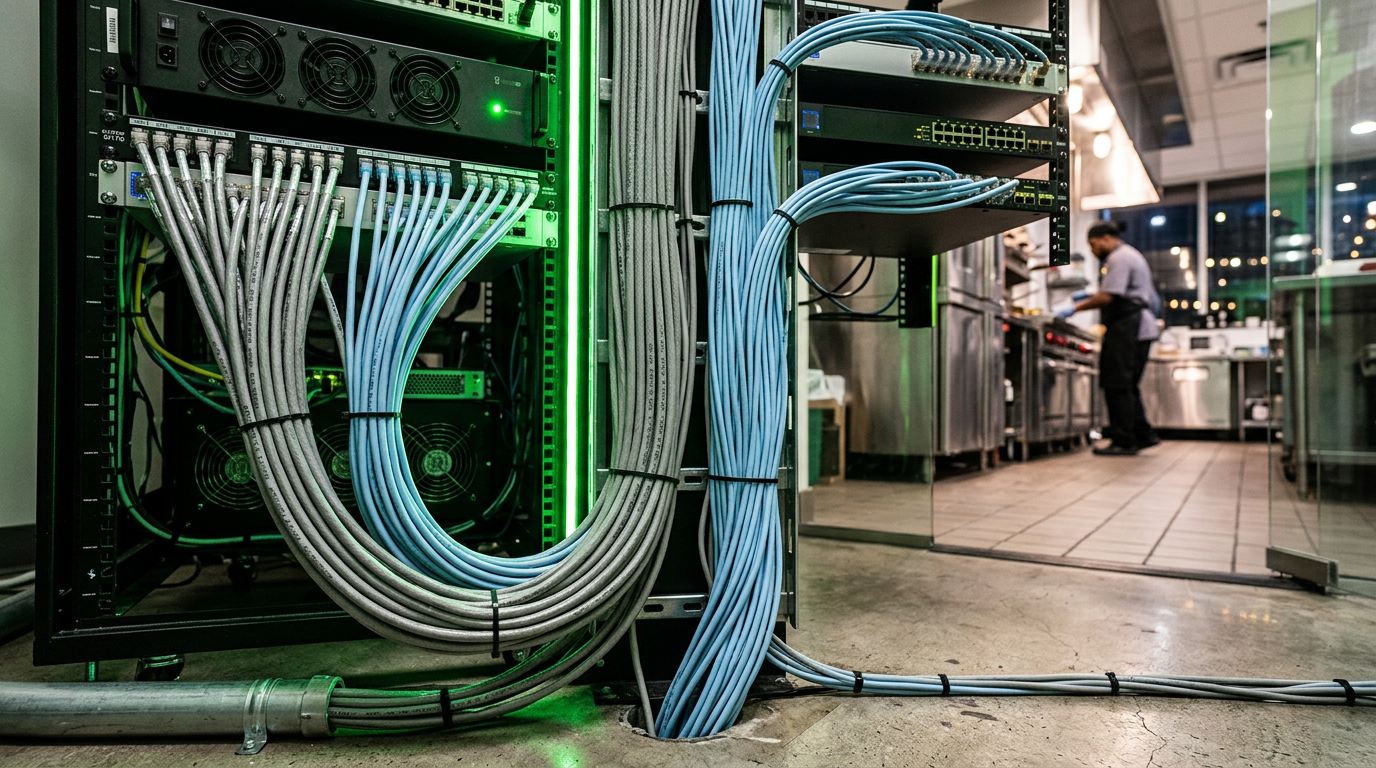
For a high-volume Tampa restaurant, shielded Cat6A cabling is the recommended standard for kitchen-adjacent areas to prevent EMI-induced data loss. While unshielded (UTP) cable suffices for front-of-house guest Wi-Fi, the proximity of high-voltage refrigeration, industrial mixers, and microwave ovens necessitates the electromagnetic protection provided by shielded (STP) solutions to ensure 10Gbps performance.
Quick Facts
- EMI Sources: Industrial induction cooktops and walk-in compressors generate up to 50-60Hz of disruptive electromagnetic interference.
- Standard Compliance: TIA-568.2-D standards govern the installation and grounding requirements for shielded twisted pair (STP) systems.
- Bandwidth Headroom: Cat6A STP provides a 500MHz frequency range, nearly double that of standard Cat6.
- Heat Ratings: High-grade plenum-rated (CMP) jackets are required by Florida building codes for any cabling run through air-handling spaces.
- Grounding Necessity: Shielded systems require end-to-end bonding to a telecommunications grounding busbar to be effective.
| Cable Type | Typical Cost (Per Drop) | Best Use Case | EMI Resistance |
|---|---|---|---|
| Cat6 UTP | $175 - $225 | Guest Wi-Fi, Office Desks | Low |
| Cat6A STP | $250 - $350 | Kitchen POS, Video Walls | High |
| Fiber Optic | $400 - $600 | Building Backbones | Absolute |
The Franchise Owner’s Dilemma: Interference vs. Infrastructure
Imagine a Friday night in Tampa’s Midtown. The dining room is packed, and the kitchen is at peak capacity. Suddenly, the Kitchen Display System (KDS) begins to lag. Orders are dropping, or worse, the POS terminals are reporting intermittent "network busy" errors. For a franchise owner, this isn't just a glitch; it’s a direct hit to the bottom line and guest experience.
In many cases, the culprit isn't the software or the ISP—it is the physical layer. Restaurant kitchens are dense environments packed with high-voltage equipment. When a network cable is run parallel to power lines for a walk-in freezer or sits too close to a high-frequency microwave, it encounters Electromagnetic Interference (EMI). This causes packet loss, forcing the system to re-transmit data and creating the "lag" that frustrates your staff.
Why Shielded Cabling (STP) Matters in the Kitchen
Standard Unshielded Twisted Pair (UTP) cable relies on the physical twist of the copper wires to cancel out interference. However, in the high-noise environment of a commercial kitchen, this isn't always enough. Shielded (STP) cabling adds a metallic foil or braided shield around the internal conductors. This shield acts as a Faraday cage, reflecting or grounding the noise before it ever touches your data.
For a mid-sized restaurant, the investment in shielded cabling for critical backbone paths—such as the lines connecting your server rack to the kitchen's primary switch—prevents "alien crosstalk" and external noise from degrading the signal. While the material cost for Cat6A STP is roughly 20-40% higher than UTP, the cost of a single hour of downtime during a Tampa lunch rush far exceeds that initial investment.
Future-Proofing for Digital Signage and IoT
Modern Tampa eateries are no longer just kitchens; they are technology hubs. From digital menu boards that refresh based on inventory to IoT-connected sensors that monitor refrigerator temperatures for health inspections, the demand for clean data is rising.
If you are planning to install large-format 4K digital signage or high-definition IP security cameras near heavy machinery, shielded cabling is virtually mandatory. High-definition video signals are particularly sensitive to EMI, which can manifest as flickering, signal dropouts, or digital artifacts on your menu boards.
What This Means in Central Florida
In the Tampa Bay area, local factors heavily influence infrastructure decisions. High humidity levels mean that any outdoor-facing cabling (like those for patio AV or exterior security cameras) must be rated for moisture resistance to prevent oxidation of the copper.
Furthermore, Florida's frequent lightning activity creates significant transient surges. While a shielded cable is not a lightning protection device, a properly grounded STP system—installed by a technician who understands Florida's NEC requirements—provides a more robust pathway for dissipating static build-up compared to unshielded alternatives. When working with local permitting offices in Hillsborough or Pinellas County, ensuring your low-voltage contractor is adhering to strict plenum-rating codes for ceiling spaces is essential for passing inspections.
Frequently Asked Questions
Can I mix shielded and unshielded cable in the same restaurant?
Yes, it is common to use shielded Cat6A for high-interference areas like the kitchen or machine rooms while utilizing standard Cat6 UTP for the dining area Wi-Fi and front-of-house office. This hybrid approach optimizes your budget while protecting critical data paths.
Does shielded cabling require special connectors?
Yes, shielded cable must be terminated with shielded RJ45 jacks or patch panels. These connectors have a metal housing that contacts the cable's foil shield, allowing the interference to be safely routed to the building's ground system via the rack.
How much more expensive is shielded cabling to install?
Labor costs are generally 15-25% higher for shielded systems because the grounding and bonding process is more meticulous. Additionally, the cable itself is thicker and heavier, which can increase the time required for routing through tight conduit or ceiling spaces.
Is Cat6A better than Cat6 for a Tampa restaurant?
Cat6A is superior for restaurants because it supports 10-Gigabit speeds over longer distances and has better heat dissipation properties. As restaurant technology becomes more data-intensive, Cat6A ensures you won't need to re-wire your walls for at least a decade.
Will shielded cable protect my network from lightning?
Shielded cable is designed to mitigate electromagnetic interference, not direct lightning strikes. However, a properly grounded shielded system is part of a comprehensive strategy to reduce static and minor electrical surges that are common during Central Florida’s summer storm season.
---
Planning a project like this? See our [structured cabling services](/services/structured-cabling) or [get a free site assessment](/contact) from InCTRL's Orlando team.
Sources
- [Structured Cabling for Restaurants - Enitech Solutions](https://enitechsolutions.com/why-structured-cabling-is-the-backbone-of-modern-restaurant-technology/?utm_source=MSPdatabase.com&utm_medium=referral)
- [Structured Cabling - Mission Criticals Solutions](https://missioncriticalsolutions.net/commercial/structured-cabling/)
- [Structured Cabling Services in Tampa - JR Electronics](https://jreservicesinc.com/commercial/structured-cabling/)
InCTRL Technology Team
Commercial integration specialists with 20+ years installing security, cabling, signage, AV and IT systems across Central Florida. About us
Explore our services
Areas we serve
Need This Done at Your Facility?
Orlando-based since 2004 — 3,300+ jobs completed. Talk to a real technician, not a call center.