Scaling Surveillance: Multi-Site Retail Security for Remote Managers
Learn how to integrate security systems across multiple retail locations using modern infrastructure and 2026 data privacy standards.
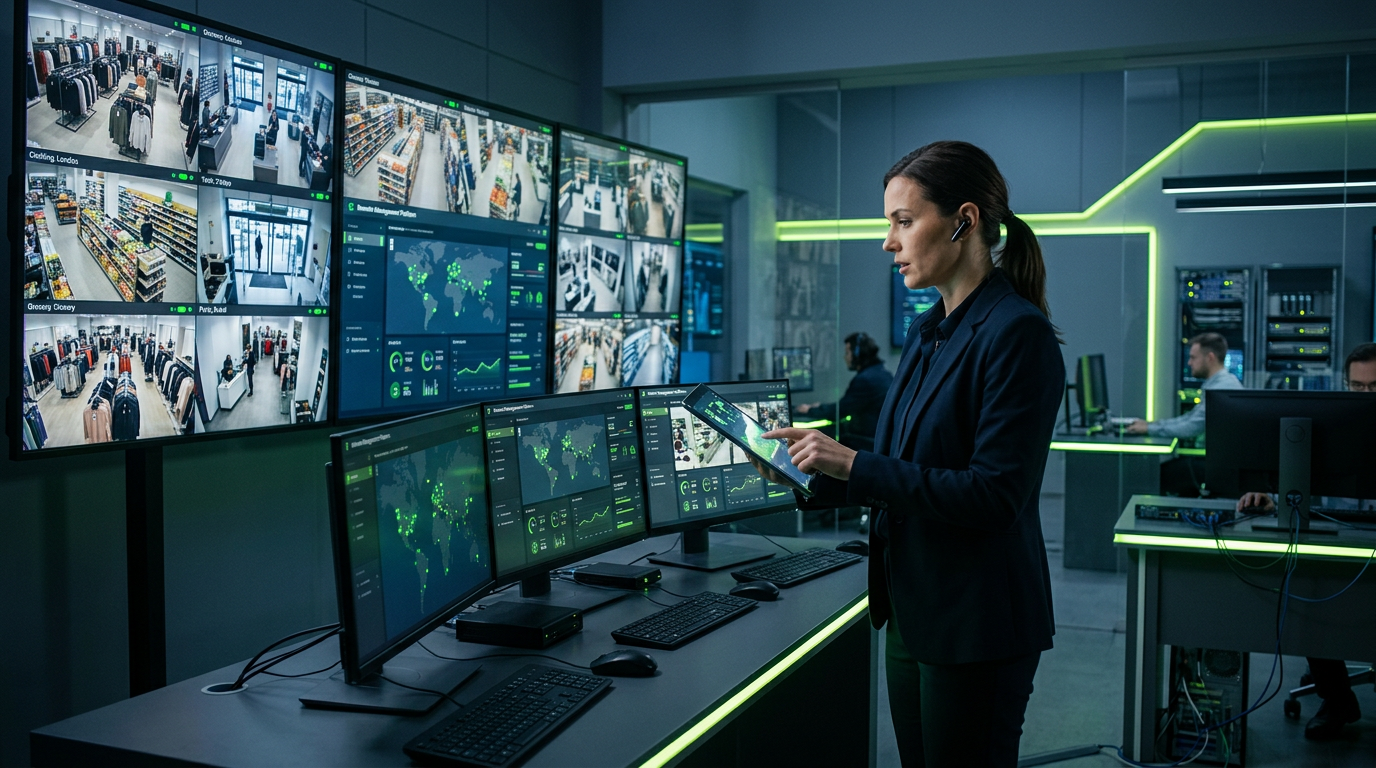
For a regional manager in Jacksonville overseeing ten retail locations, the physical distance between storefronts is often the greatest security vulnerability. When an incident occurs at a site two hours away, the delay in accessing footage or verifying an alarm doesn't just waste time—it increases liability.
Managing security for a multi-site retail operation requires moving past the "isolated DVR" mindset. To maintain oversight without living in your car, you need a unified infrastructure that treats every camera across every location as a single, accessible network.
The Shift to Hybrid-Cloud Compliance
As we move through 2026, the regulatory landscape for retail security has shifted. Specifically, updated data privacy frameworks and state-level consumer protection acts now require businesses to be more transparent about how they store and secure surveillance data.
Modern systems are moving toward Hybrid-Cloud architectures. This approach keeps high-resolution footage stored locally on a hardened appliance while metadata and low-bandwidth streams are sent to the cloud. This ensures that even if a local network goes down, you have a record of the event, all while maintaining the encryption standards required by modern cybersecurity insurance policies.
Building an Infrastructure That Scales
One of the most common mistakes in retail expansion is “bolting on” security. A store in Mandarin might have one brand of cameras, while a new location in the St. Johns Town Center has another. This creates a fragmented ecosystem that is impossible to manage remotely.
To build a scalable playbook, prioritize these three infrastructure pillars:
- Standardized Structured Cabling: Every camera is only as reliable as the copper or fiber behind it. Using Category 6 (Cat6) or higher ensures you have the bandwidth for 4K streams and the Power over Ethernet (PoE) capacity for advanced PTZ (Pan-Tilt-Zoom) cameras.
- Centralized Management Software (CMS): A robust CMS allows a manager to view a map of all Jacksonville locations, click a site, and see live feeds instantly. Look for platforms that offer "Single Sign-On" (SSO) to maintain strict access control.
- Network Segmentation: To protect your Point of Sale (POS) systems, security cameras should live on a separate Virtual Local Area Network (VLAN). This prevents a compromised camera from becoming a gateway to your customers' credit card data.
Leveraging AI for Proactive Oversight
Remote management used to mean staring at a wall of monitors hoping to catch a shoplifter. In 2026, the "Playbook" relies on Edge Analytics. Modern cameras can now distinguish between a stray cat in the parking lot and a person lingering near the loading dock after hours.
By setting up "Line Cross" or "Loitering" alerts, managers receive push notifications only when a specific, pre-defined event occurs. This allows you to manage by exception rather than constant observation. For multi-site retail, this means you can monitor the health of all stores from a single smartphone app, receiving alerts for offline cameras or unauthorized entries across the entire district.
The Phased Integration Approach
Upgrading five or ten locations at once is a significant capital expenditure. Many Jacksonville businesses find success through a phased infrastructure rollout.
1. Phase 1: The Backbone. Audit existing cabling and network hardware. Replace aging switches with PoE+ managed switches to support modern cameras.
2. Phase 2: High-Traffic Areas. Prioritize cameras for entrances, POS terminals, and loading docks across all sites to ensure immediate ROI in loss prevention.
3. Phase 3: Unified Integration. Move all sites onto a single cloud-managed dashboard for centralized viewing and remote troubleshooting.
Security as a Business Intelligence Tool
Beyond loss prevention, integrated security systems provide valuable data for retail operations. Heat mapping features can show you which aisles in your Beach Blvd location get the most foot traffic compared to your San Marco boutique.
By integrating security with digital signage and occupancy sensors, retail managers can optimize staffing levels and store layouts based on real-time visual data. This transition from "security as a cost" to "security as an asset" is what defines successful multi-site management in the current market.
When your infrastructure is designed to scale, adding your eleventh or twelfth location becomes a simple matter of replication rather than a ground-up engineering headache. By focusing on standardized cabling, hybrid storage, and proactive analytics, remote managers can finally keep their eyes on every store without ever leaving the office.
Sources
- [Building Network Infrastructure That Scales With Your Business](https://www.asktechnolink.com/blog?p=building-network-infrastructure-that-scales-with-your-business-260615)
- [Why Network Infrastructure Is the Backbone of Modern Business ...](https://sontechnology.com/2026/06/27/modern-business-network-infrastructure/)
- [Nonprofit IT Infrastructure on a Budget in 2026 - entechUS.com](https://www.entechus.com/blogs/nonprofit-it-infrastructure-on-a-budget-in-2026?hsLang=en)
InCTRL Technology Team
Commercial integration specialists with 20+ years installing security, cabling, signage, AV and IT systems across Central Florida. About us
Explore our services
Areas we serve
Need This Done at Your Facility?
Orlando-based since 2004 — 3,300+ jobs completed. Talk to a real technician, not a call center.