QSR Digital Menu Board Transition: Real-World Install Timelines
Learn the actual phases of transitioning a quick-service restaurant to digital menu boards, from low-voltage cabling to final display mounting.
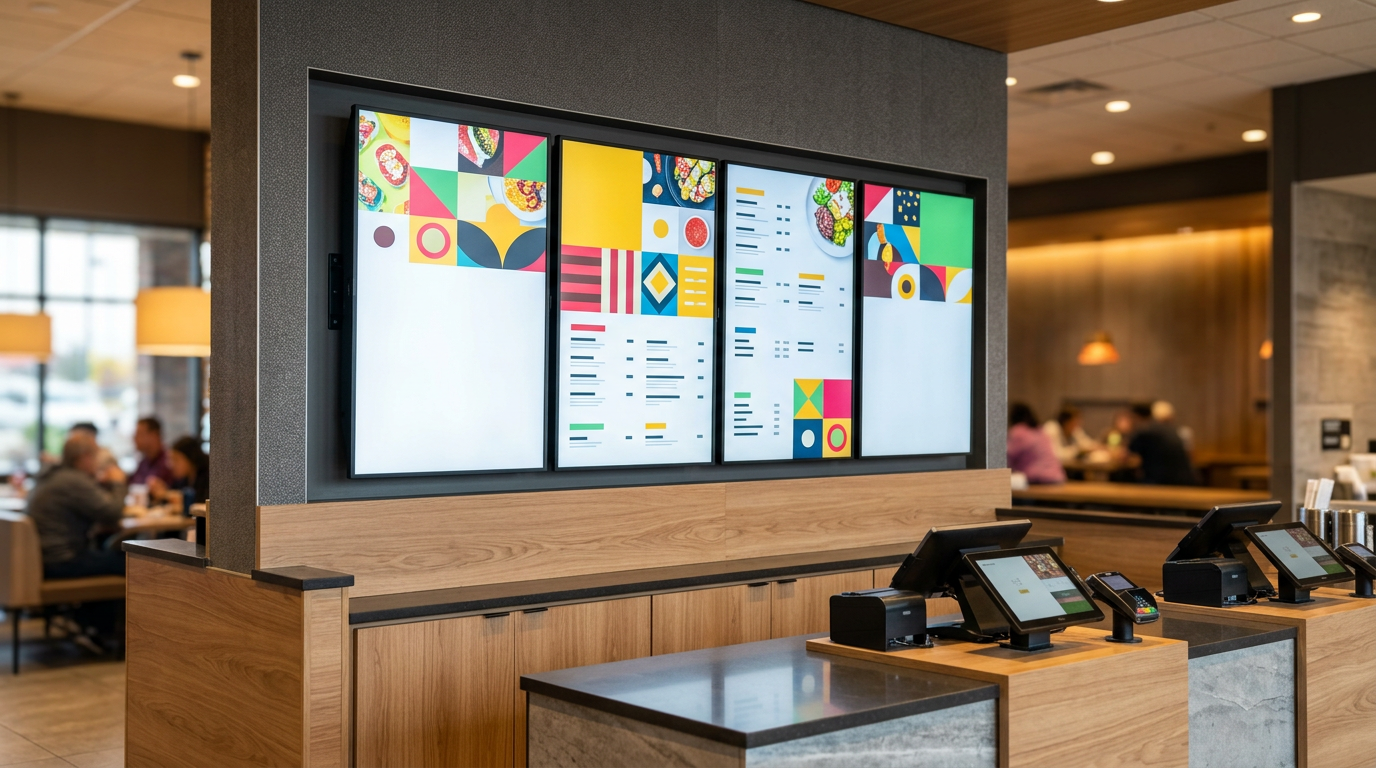
Transitioning a quick-service restaurant (QSR) from static posters to digital menu boards takes 3 to 5 weeks for a single-site commercial project, including procurement, cabling, and mounting. While many vendors claim a 24-hour turnaround, this only refers to the software setup, ignoring the 100+ feet of Cat6 cabling and structural backing required for a safe, code-compliant physical installation.
Quick Facts
- Cabling Standard: Minimum of one Cat6 drop per display to support HDBaseT or IP-based media players.
- Screen Brightness: Indoor units require 500–700 nits, while drive-thru units must exceed 2,500 nits for Florida sun visibility.
- Power Requirements: Dedicated 20-amp circuits are typically required for arrays of four or more 55-inch displays.
- Weight Load: Commercial mounts for a three-screen array often exceed 150 lbs, requiring specialized blocking behind the drywall.
- Permitting: Electrical permits for new outlets in Central Florida typically take 5–10 business days depending on the municipality.
Transition Timeline and Hardware Specs
| Phase | Duration | Primary Tasks |
|---|---|---|
| Site Survey & Planning | 3–5 Days | Measuring ceiling height, verifying plenum space, checking electrical capacity. |
| Procurement & Prep | 10–14 Days | Ordering commercial-grade displays (16/7 or 24/7 rated) and custom mounting brackets. |
| Infrastructure Install | 1–2 Days | Pulling Cat6 cable from the server rack to the menu head; installing new power outlets. |
| Mounting & Integration | 1 Day | Securing screens, connecting media players, and calibrating dayparting schedules. |
The Myth of the Plug-and-Play Menu
The biggest misconception in the QSR industry is that digital signage is as simple as hanging a few televisions. In a commercial environment, consumer-grade TVs will fail within 6 to 12 months due to heat from kitchen equipment and 16-hour duty cycles.
A professional installation starts with structured cabling. We pull Cat6 through the ceiling—often navigating tight plenum spaces and grease-heavy environments—to a central IT closet. This allows the manager to update prices from a back-office PC rather than standing on a ladder with a USB stick. Furthermore, the physical weight of three or four 55-inch commercial displays is significant. If your wall wasn't built with 2x6 blocking at the menu height, we have to clear the drywall and reinforce the studs to meet safety standards.
What This Means in Central Florida
For restaurant owners in Orlando or Tampa, the environment dictates the tech. The high humidity in Central Florida means that back-of-house displays near the fryers or steam tables must have treated internal components to prevent corrosion.
If you are installing outdoor signage for a drive-thru, salt air (especially in coastal cities like Melbourne or Clearwater) and extreme heat are the primary killers of electronics. We utilize IP56-rated enclosures with active cooling fans to ensure the screens don't black out when the Florida sun hits 95 degrees. Additionally, scheduling a crew during the rainy season requires a buffer; outdoor trenching for drive-thru power and data must be timed between afternoon thunderstorms to avoid flooding open conduits.
Frequently Asked Questions
Can I use my existing Wi-Fi for the menu boards?
While possible, it is not recommended for commercial QSR environments. Kitchen interference from microwaves and stainless steel walls often causes signal drops, resulting in blank screens or "loading" icons during a lunch rush. A hardwired Cat6 connection ensures 99.9% uptime for price and menu updates.
Do I need to close my restaurant during the installation?
Most installations can be performed during "off-hours" or overnight shifts. We typically complete the messy work—cabling and structural reinforcement—between 10:00 PM and 6:00 AM so the kitchen is clear for prep the next morning. The final mounting usually takes less than four hours.
What happens if a screen goes dark during service?
Commercial displays are built with failover technology. If the primary media player or network connection fails, the screen can automatically switch to a pre-loaded image on its internal storage. This prevents a total loss of menu visibility while a technician is dispatched to troubleshoot the network.
Is specialized power required for a 4-screen array?
Yes. Four commercial displays plus their media players can pull significant amperage. We often coordinate with an electrician to install dedicated quad-plex outlets behind the mounting site to avoid tripping breakers that are shared with other critical kitchen equipment like POS terminals or soda fountains.
How does dayparting work for breakfast and lunch transitions?
Digital signage software allows for automated scheduling. You can set the system to switch from the breakfast menu to the lunch menu at exactly 10:30 AM without manual intervention. This also allows for "LTO" (Limited Time Offer) promotions to trigger based on the time of day or even the outside temperature.
---
Planning a project like this? See our [digital signage installation services](/services/digital-signage) or [get a free site assessment](/contact) from InCTRL's Orlando team.
Sources
- [Complete Quick Service Restaurant Guide - QSR Digital Signage](https://digitalsignage.com/digital_signage/docs/industries/quick-service-restaurants/)
- [Digital Signage in Restaurants: Zones, Costs and Setup in 2026](https://deckerapp.com/blog/digital-signage-in-restaurants/)
- [Restaurant Technology in 2026: Operators' Guide](https://merchants.doordash.com/en-us/blog/restaurant-technology)
InCTRL Technology Team
Commercial integration specialists with 20+ years installing security, cabling, signage, AV and IT systems across Central Florida. About us
Explore our services
Areas we serve
Need This Done at Your Facility?
Orlando-based since 2004 — 3,300+ jobs completed. Talk to a real technician, not a call center.