PCI-DSS Compliance: Why Software Won't Fix Your Physical Network Gaps
Software updates alone cannot secure a retail POS network. Learn how physical infrastructure and field services ensure PCI-DSS 4.0 compliance for Central Florida retailers.
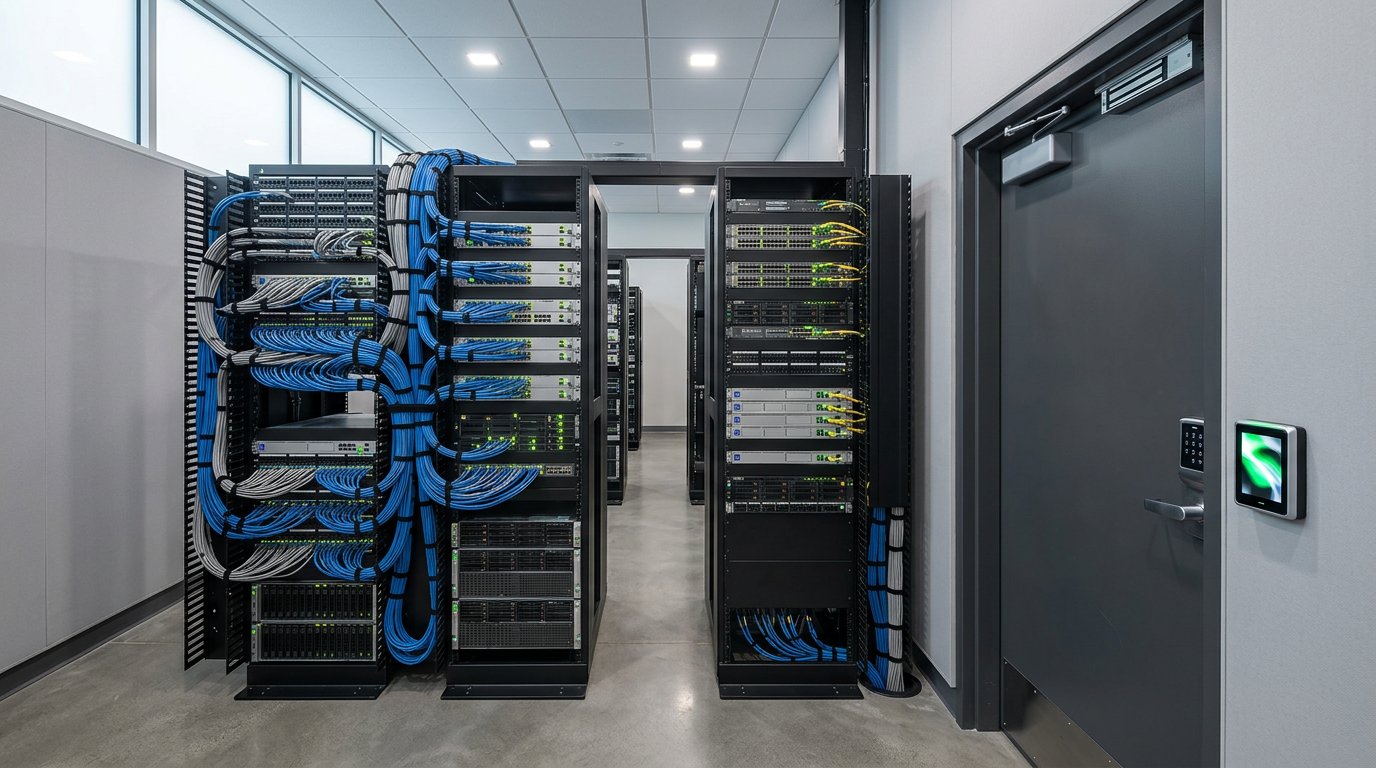
Software updates and firewalls are insufficient for PCI-DSS 4.0 compliance if your physical network infrastructure is exposed. True compliance requires a hardware-first approach where POS systems are physically isolated, cabling is secured in locked enclosures, and network jacks are disabled in public areas. Without physical security, your data remains vulnerable to local hardware shims and unauthorized access.
Quick Facts
- PCI-DSS 4.0 Standard: Requires multi-factor authentication (MFA) for all access into the cardholder data environment (CDE).
- Physical Access Control: Requirement 9 mandates that any physical access to data or systems that house cardholder data must be restricted.
- Network Segregation: POS traffic must be logically or physically separated from guest Wi-Fi and back-office networks to minimize audit scope.
- Inspection Frequency: Retailers must perform periodic physical inspections of POS devices to check for tampering or skimming devices.
The Physical Reality of Retail Compliance
Most retail IT managers focus on encryption and tokenization. While those are vital, the Payment Card Industry Data Security Standard (PCI-DSS) explicitly demands physical safeguards. If a technician can walk into your store and plug a laptop into an open network jack behind a digital signage display, you are out of compliance.
PCI-DSS 4.0 has tightened the requirements around the Cardholder Data Environment (CDE). This means the structured cabling running through your ceiling and the switches in your back office are just as relevant as the software running the register. Using color-coded Cat6 cabling to differentiate POS lines from general-purpose internet is a common field service practice that helps managers identify unauthorized changes at a glance.
| Compliance Component | Physical Requirement | Realistic 2026 Implementation |
|---|---|---|
| Cardholder Data Environment | Locked Racks/Cabinets | 12U to 42U wall-mount or floor racks with restricted key access |
| Point of Sale Endpoints | Tamper-Evident Seals | Physical inspection logs every 30 to 90 days per location |
| Network Infrastructure | Port Security | Disabling unused RJ45 jacks and using locking patch cords |
| Surveillance Integration | Visual Monitoring | 4K cameras focused on POS terminals with 90-day retention |
Beyond the Firewall: Securing the Store Floor
Field services play a massive role in maintaining the integrity of the POS network. When a new digital signage player is installed or a Wi-Fi access point is replaced, the risk of cross-contaminating the POS network is high. Technicians must ensure that the "air gap" or VLAN segmentation remains intact during every hardware swap.
Cable management is not just about aesthetics; it is a security feature. Loose wires hanging under a counter provide an easy target for "shimmers" or hardware keyloggers. Organized, labeled, and bundled cabling makes it immediately obvious when a foreign device has been spliced into the line.
What This Means in Central Florida
For retailers in Orlando, Tampa, and the surrounding areas, environmental factors impact PCI-related hardware longevity. High humidity can lead to oxidation on copper patch panel contacts, potentially causing intermittent connectivity that triggers system alerts often mistaken for cyberattacks.
During hurricane season, power instability is a major threat to compliance. PCI-DSS requires systems to be available and secure; a fried firewall or a switch that resets to factory defaults (opening all ports) after a power surge can create a massive security hole. We recommend battery backups with at least 1500VA for POS network stacks to ensure graceful shutdowns or continuous uptime during Florida's frequent summer lightning storms.
Frequently Asked Questions
Can I use the same internet line for my POS and my guest Wi-Fi?
You can use the same physical ISP circuit, but the networks must be strictly segmented. This is typically done via a firewall using VLANs (Virtual Local Area Networks). If a guest on your Wi-Fi can "see" the IP address of your register, you will fail a PCI audit.
Do security cameras need to be on a separate network for PCI compliance?
While not strictly required by PCI-DSS to be on a separate network, it is a best practice. Keeping your 4K surveillance traffic on a separate VLAN prevents high-bandwidth video data from slowing down payment processing and keeps your security footage isolated from the cardholder data environment.
What is the most common physical security failure in retail stores?
Unsecured network racks are the top failure. Many small-to-mid-size retailers keep their switches and routers on open shelving in a back office that also serves as a breakroom or storage area. PCI-DSS requires these components to be in a locked cabinet or a restricted-access room.
How does structured cabling affect my PCI audit scope?
Properly documented structured cabling can actually reduce your audit scope. By clearly labeling and dedicatedly routing POS-specific cables, you can prove to an auditor exactly which parts of the building's infrastructure handle sensitive data, potentially exempting other parts of the building from the most rigorous testing.
Is Wi-Fi 7 secure enough for wireless POS terminals?
Wi-Fi 7 offers advanced encryption, but PCI compliance for wireless POS requires specific configurations, including WPA3-Enterprise and the changing of all default vendor passwords. Field technicians must also perform rogue access point detection to ensure no unauthorized hotspots are mimicking the store's secure network.
---
Planning a project like this? See our [IT field services](/services/it-field-services) or [get a free site assessment](/contact) from InCTRL's Orlando team.
Sources
- [Are you still PCI Compliant?: Changes to Payment Regulation in 2018](https://www.truno.com/truno-insights/are-you-still-pci-compliant-changes-to-payment-regulation-in-2018)
- [Retail Security & PCI-DSS - Sidechain Security](https://sidechainsecurity.com/industries/retail/)
- [PCI DSS Compliance and Assessment Services - HALOCK](https://www.halock.com/compliance/pci-dss/)
InCTRL Technology Team
Commercial integration specialists with 20+ years installing security, cabling, signage, AV and IT systems across Central Florida. About us
Explore our services
Areas we serve
Need This Done at Your Facility?
Orlando-based since 2004 — 3,300+ jobs completed. Talk to a real technician, not a call center.