Beyond the Fob: Why Orlando Businesses Are Switching to Mobile Access
Discover why Central Florida commercial facilities are ditching physical fobs for mobile credentials to improve security and survive the coastal environment.
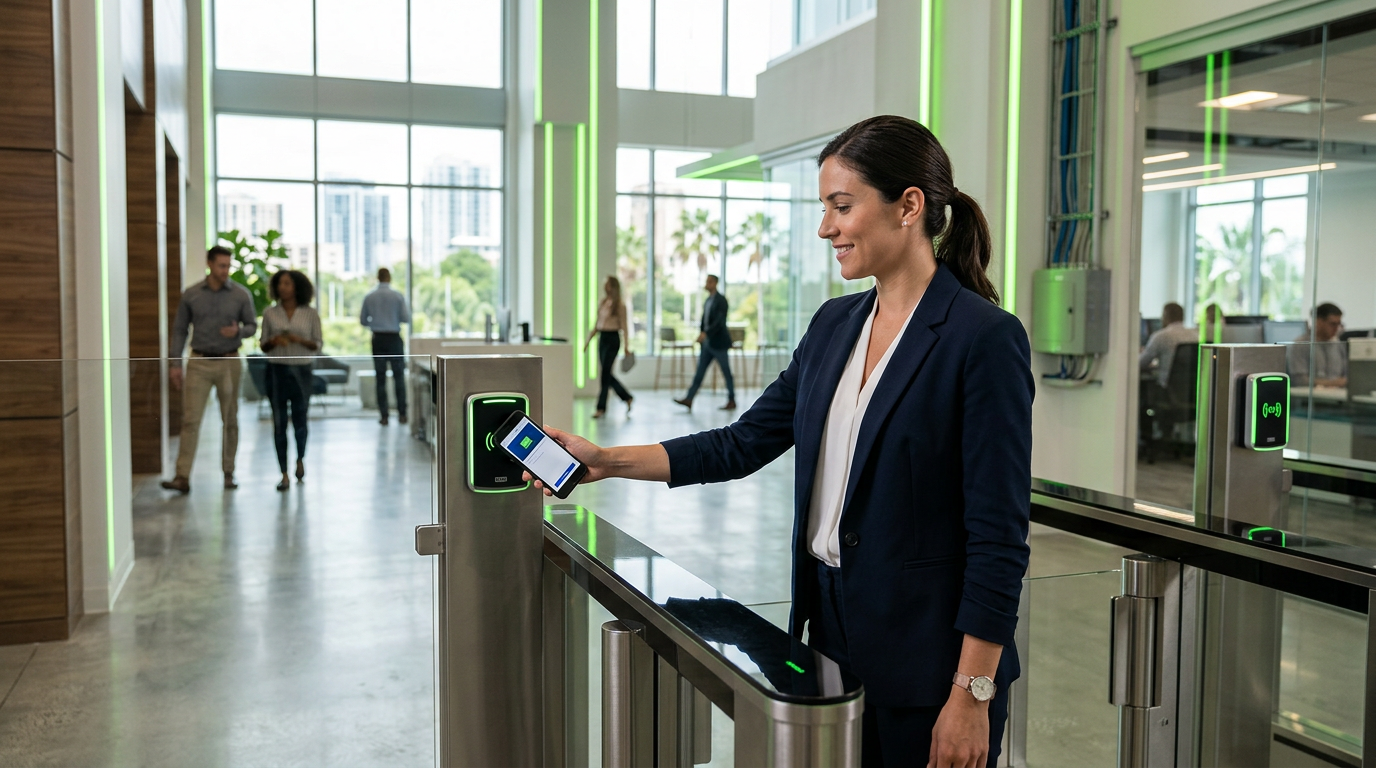
Walk through any commercial parking lot in Orlando during July, and you’ll see the same ritual: an employee fumbling through their pockets or bag for a plastic key fob, only to find the reader unresponsive due to moisture buildup or the fob itself cracked from the heat.
For years, proximity cards and fobs were the gold standard for commercial security. However, as Central Florida continues to grow as a hub for hospitality, healthcare, and retail, the limitations of physical hardware are becoming impossible to ignore. From the relentless humidity to the logistical nightmare of high turnover, local businesses are pivoting toward Mobile Credentials.
The Environmental Edge: Beating Florida’s Humidity
In the Central Florida market, hardware longevity is a constant battle. Standard card readers and physical fobs face unique environmental stressors that businesses in drier climates rarely encounter.
- Salt Air & Corrosion: For facilities closer to the coast or even inland warehouses with high airflow, salt air can lead to internal corrosion of the copper coils inside traditional fobs.
- Extreme Heat: Leaving a plastic badge in a hot car parked at an Orlando office complex can lead to warping, rendering the internal RFID chip useless.
- Condensation: High humidity often leads to moisture ingress in outdoor-mounted readers.
Mobile credentials bypass many of these physical failure points. By utilizing the Bluetooth Low Energy (BLE) or Near Field Communication (NFC) capabilities already built into a smartphone, businesses reduce the number of physical touchpoints that can fail due to the elements.
Why Smartphones Outperform Plastic
Transitioning to mobile access control isn't just about avoiding broken fobs; it’s about leveraging the sophisticated security layers of modern mobile devices.
Multi-Factor Authentication (MFA)
When an employee loses a key fob, anyone who finds it has instant access to your building. When an employee uses a mobile credential, the phone itself is usually protected by biometrics (FaceID or fingerprints) or a passcode. This adds an immediate layer of MFA that physical cards simply cannot provide.
Reduced Phishing and Cloning Risks
Traditional 125kHz proximity cards are notoriously easy to clone with inexpensive tools found online. Mobile credentials use encrypted communication protocols that are significantly harder to intercept or duplicate, aligning with the broader industry shift toward passkeys and passwordless authentication.
Streamlining Operations for High-Turnover Industries
Orlando’s economy thrives on hospitality and retail—sectors known for high seasonal turnover. Managing a physical inventory of fobs is a logistical burden for HR and IT departments.
1. Instant Issuance: You can email a digital key to a new hire before they even arrive for their first shift.
2. Remote Revocation: If an employee leaves the company, their access can be revoked instantly through a cloud-based dashboard. There is no need to chase down a physical piece of plastic or worry about unauthorized copies.
3. Audit Trails: Modern systems provide real-time data on who is entering which zone, which is critical for compliance in healthcare facilities or high-value retail stockrooms.
The "Intentional Range" Advantage
One of the most practical benefits of mobile access in a commercial setting is adjustable read ranges. With traditional card readers, you must be within inches of the device.
With BLE-enabled mobile access, installers can configure "long-range" entry for parking garages or loading docks. Imagine a delivery driver at a distribution center in Lakeland being able to trigger a gate from their cab via a secure app, rather than leaning out into a summer downpour to tap a badge.
Preparing for the Transition
If you are considering an upgrade to your Access Control Installation in Orlando, the transition doesn't have to happen overnight. Most modern systems utilize Multi-Technology Readers that support both legacy fobs and mobile credentials simultaneously. This allows businesses to phase out physical cards as they expire while immediately offering mobile convenience to new staff.
When planning your rollout, consider the following infrastructure needs:
- Structured Cabling: Ensure your readers are supported by high-quality Cat6 cabling to handle the data requirements of smart readers.
- Cloud Integration: Move toward a cloud-managed platform so you can manage credentials across multiple sites (e.g., an office in Downtown Orlando and a warehouse in Kissimmee) from a single pane of glass.
- Network Security: Work with your IT field services provider to ensure your access control network is segmented from your primary business data to prevent cross-vulnerabilities.
Mobile credentials are no longer a futuristic luxury; they are a practical solution to the environmental and operational challenges of doing business in Florida.
Sources
- [Access Control Installation Orlando | Card Readers & Keypads](https://www.keycopyorlando.com/commercial/access-control/)
- [IT & Cybersecurity Blog for SMBs | PTG - Perez Technology Group](https://www.pereztechnologygroup.com/blog)
- [Florida Commercial Security Services: What You Need and Who to ...](https://protechsecurity.com/florida-commercial-security-services-what-you-need-and-who-to-trust/)
InCTRL Technology Team
Commercial integration specialists with 20+ years installing security, cabling, signage, AV and IT systems across Central Florida. About us
Explore our services
Areas we serve
Need This Done at Your Facility?
Orlando-based since 2004 — 3,300+ jobs completed. Talk to a real technician, not a call center.