Optimizing Low-Light Security for Lakeland Industrial Sites
Learn how to optimize nighttime surveillance for Florida warehouses with our guide on low-light technology, MDF/IDF placement, and cost-vs-value analysis.
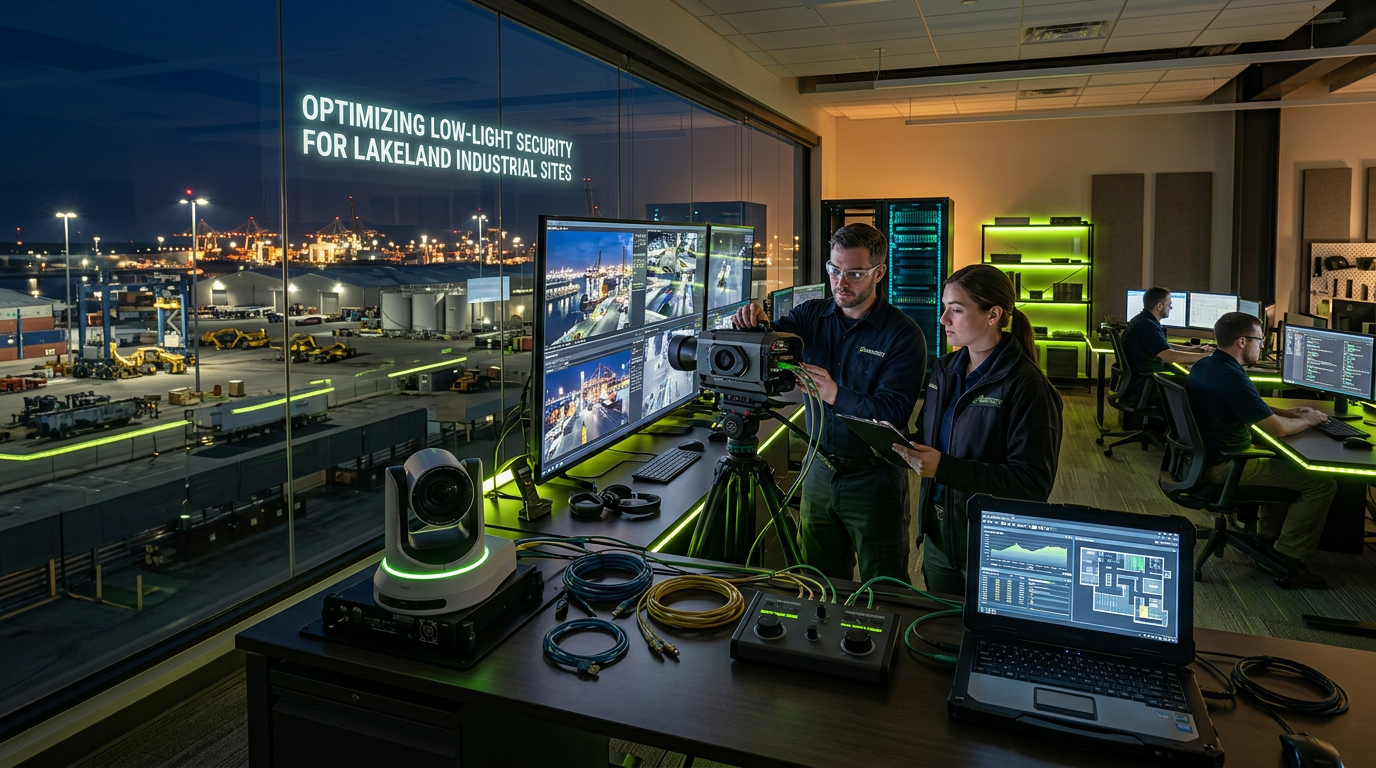
A perimeter fence at 2:00 AM in a Lakeland industrial park looks vastly different to a security camera than it does during the high-noon Florida sun. For many facility managers, the high-definition clarity they saw during the daytime demo vanishes into a grainy, flickering mess once the sun sets. When shadows stretch and movement becomes a blur of gray pixels, your security system isn't protecting your assets—it’s just recording the lack of them.
Optimizing low-light surveillance for industrial sites requires more than just high-megapixel counts. It demands a strategic alignment of sensor technology, localized network infrastructure, and proper environmental planning.
The Sensor Factor: Why Megapixels Aren't Everything
In the world of low-light optics, the size of the sensor often matters more than the resolution. A 4K camera with a tiny sensor will struggle in the dark because each individual pixel is too small to capture sufficient photons. For industrial applications like loading docks and scrap yards, look for Large Format Sensors (such as 1/1.8" or 1/1.2").
There are two primary technologies currently leading the market:
- Infrared (IR) Illumination: The camera emits light invisible to the human eye. This is effective for total darkness but results in black-and-white footage.
- Full-Color Night Vision: Using ultra-wide apertures and high-sensitivity sensors, these cameras can produce full-color images in near-total darkness, which is vital for identifying the color of a getaway vehicle or a suspect's clothing.
The Infrastructure Backbone: MDF and IDF Strategy
High-performance low-light cameras generate significant data traffic, especially when utilizing advanced AI analytics to filter out "noise" from rain or insects. This is where your network closet design becomes critical.
Following 2026 infrastructure standards, industrial sites should generally feature one Intermediate Distribution Frame (IDF) for every 10,000 square feet of floor space. If your cameras are mounted on perimeter poles hundreds of feet from the main building, the voltage drop and signal degradation can cause cameras to flicker or reboot when their power-hungry IR illuminators kick on at night.
Best Practices for Industrial Layouts:
- MDF/IDF Sizing: Ensure closets are sized for both current and future device counts, including dedicated rack space for UPS (Uninterruptible Power Supply) units.
- Climate Control: Low-light sensors and high-end NVRs generate heat. Ensure your MDF has dedicated cooling to prevent hardware throttling.
- Cable Integrity: Use shielded Category 6A cabling for outdoor runs to mitigate electromagnetic interference that can degrade image quality in low-light settings.
Analytics: Reducing the "Noise"
Industrial sites are prone to "false positives" at night—blown trash, palm fronds, or heavy rain can trigger alerts. Modern low-light systems utilize Edge Analytics to distinguish between a stray cat and a human intruder.
By processing this data at the camera level (the "edge") before sending it back to the Main Distribution Frame (MDF), you reduce the strain on your network bandwidth and ensure that security personnel are only alerted to genuine threats.
Cost-vs-Value Breakdown
Investing in high-end low-light surveillance requires a higher upfront capital expenditure, but the ROI is found in reduced loss and lower insurance premiums. Below are ballpark estimates for a mid-sized industrial facility (approx. 20,000–30,000 sq. ft.).
| Feature | Entry-Level System | Professional Industrial Grade |
|---|---|---|
| Camera Cost | $150 - $300 per unit | $600 - $1,200 per unit |
| Sensor Tech | Standard IR (B&W) | Full-Color Low-Light / AI Analytics |
| Infrastructure | Unmanaged switches / No UPS | Managed PoE++ Switches / Smart UPS |
| Longevity | 2-3 Years | 5-7+ Years |
| Estimated Total | $5,000 - $8,000 | $15,000 - $25,000+ |
The Value Gap: An entry-level system often fails exactly when you need it—during a crime at 3:00 AM. A professional-grade system provides actionable evidence (license plates, facial features) that can lead to recovery of assets, whereas a cheap system often only confirms that a crime occurred.
Implementation Steps for Lakeland Managers
1. Conduct a Night Audit: Walk your perimeter at 9:00 PM. Identify "dead zones" where existing lighting is insufficient.
2. Check Your UPS: Ensure your IDF closets have Xtreme Power Conversion or similar grade UPS units. A power flicker shouldn't blind your cameras for the 3 minutes it takes for them to reboot.
3. Standardize Your Closets: Map out your MDF and IDF locations. If you are building new construction, ensure you have a dedicated IDF for varje floor or 10,000 sq. ft. block to keep cable runs short and power delivery consistent.
Optimizing for the night isn't just about buying a better camera; it's about building a robust technological ecosystem that can handle the unique demands of the dark.
Sources
- [UPS for IDF and MDF Closets - Xtreme Power Conversion](https://xpcc.com/ups-for-idf-mdf-closets/)
- [MDF vs IDF Design Mistakes & Best Practices | Muhammad ...](https://www.linkedin.com/posts/muhammad-hanzallah-javed-bb69b7185_mdf-idf-structuredcabling-activity-7470434837594779648-7tsa)
- [Network Closet Design Guide 2026: Power, Cooling & Cabling](https://clrnet.net/network-closet-design-the-complete-planning-guide-for-2026/)
InCTRL Technology Team
Commercial integration specialists with 20+ years installing security, cabling, signage, AV and IT systems across Central Florida. About us
Explore our services
Areas we serve
Need This Done at Your Facility?
Orlando-based since 2004 — 3,300+ jobs completed. Talk to a real technician, not a call center.