Cloud Access Control: Bridging the Gap with Legacy Alarms
Learn how to modernize your facility's security by integrating cloud access control with existing legacy alarm systems for better ROI and visibility.
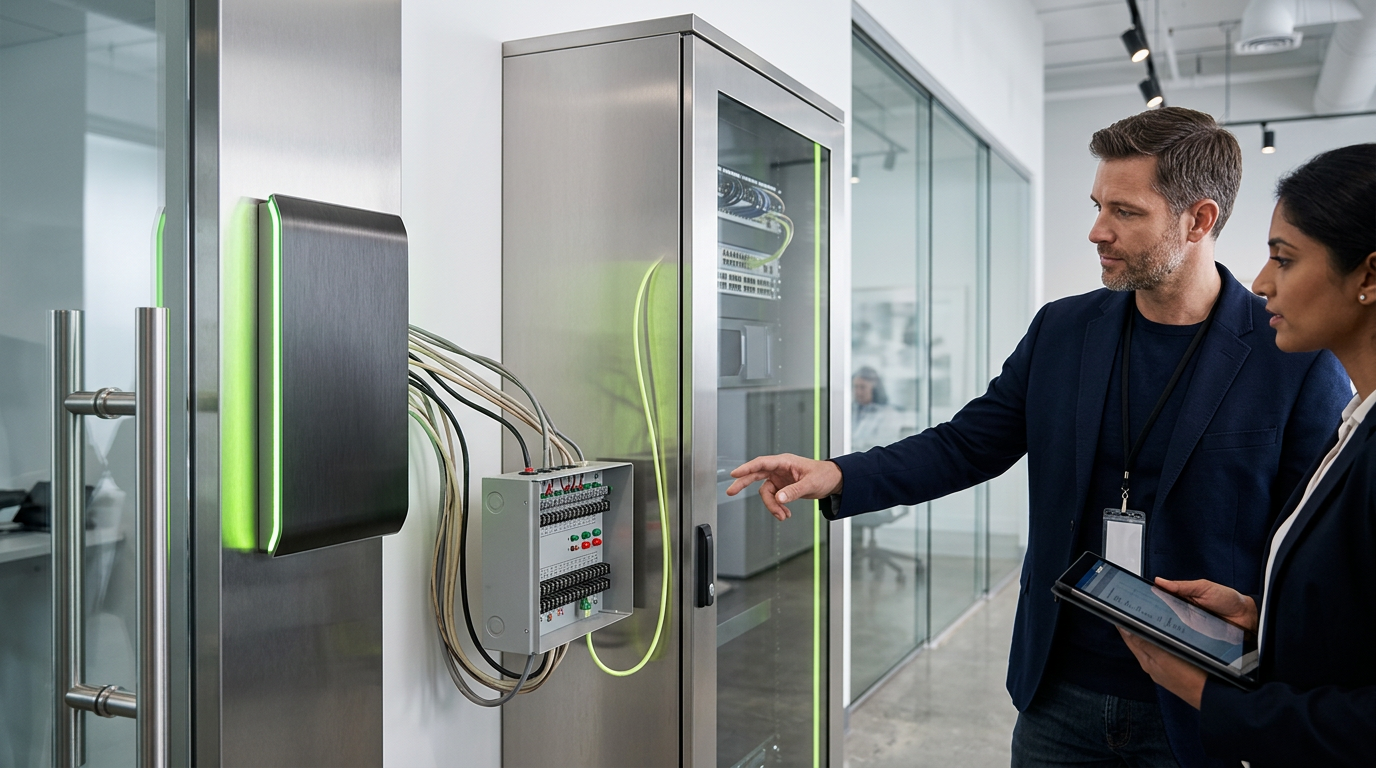
Walk into the back office of a regional retail chain or a legacy warehouse facility, and you will likely see a familiar sight: a beige metal box mounted to the wall, housing an alarm panel that has been ticking away since 2008. These legacy systems are workhorses, but they are increasingly isolated from the digital needs of modern operations.
As businesses across Central Florida scale, the friction between old-school intrusion detection and modern cloud-based access control becomes a point of operational failure. Does your manager have to carry a physical key for the door, a key fob for the reader, and a four-digit PIN for the alarm keypad? This fragmentation doesn't just slow down your team; it creates security blind spots.
Integrating Cloud Access Control (CAC) with your legacy alarm system is the most effective way to modernize without a total "rip-and-replace" of your infrastructure.
The Technical Bridge: How Integration Works
Most legacy alarm systems use Standard Wiegand protocols or dry-contact relays. Cloud access systems, like those from modern providers, use IP-based controllers that can interpret these signals.
By wiring the output of a cloud-based door controller to a zone on your legacy alarm panel, you create a unified ecosystem. When a credentialed employee swipes their mobile phone or badge at 6:00 AM, the cloud system verifies their identity and simultaneously sends a signal to the alarm panel to disarm the facility. No more rushing to a keypad to beat a 30-second entry delay.
Choosing Your Strategy: Hardwired vs. Software-Defined
When bridging the gap between old and new, two primary approaches emerge. Here is how they compare:
1. The Relay-Logic Approach (Hardware-to-Hardware)
This method uses physical wiring between the Access Control Unit (ACU) and the Alarm Panel. It treats the access system as a "user" or a "key switch" for the alarm.
- When it wins: This is the gold standard for high-security environments like healthcare pharmacies or sensitive IT server rooms. Because it relies on physical contact closures, there is no reliance on an internet connection for the two systems to talk to each other. If the cloud goes offline, the physical link remains.
- The Trade-off: It requires more labor during installation and offers less granular data. You might know the alarm was disarmed by the "Access System," but the alarm panel itself won't record which specific employee did it.
2. The Cloud-to-Cloud API Approach (Software Integration)
If your legacy alarm has been updated with a modern communication module (like an LTE or IP communicator), the two systems can often talk via the cloud using APIs (Application Programming Interfaces).
- When it wins: This is ideal for multi-site retail or corporate offices. It allows for "Global User Management." When you offboard an employee in your cloud dashboard, they are automatically revoked from the alarm system across all locations simultaneously.
- The Trade-off: It is dependent on a stable internet connection. If your ISP goes down, the automated "disarm-on-entry" might fail, forcing staff to revert to manual keypad entry.
Why Placement and Coverage Matter
Modernizing your access control is often the catalyst for reviewing your physical security layout. Just as industry standards suggest mounting identification cameras at 8–12 feet to capture usable facial data rather than just the tops of heads, your access readers should be strategically positioned to facilitate a smooth flow of traffic.
In warehouse settings, we often see 16-to-32 camera systems that act as the "eyes," while the access control acts as the "hands." By integrating the two, you can trigger a camera to bookmark a video clip the exact moment a "Door Forced Open" alarm is triggered on your legacy panel. This turns a simple siren into a searchable, actionable piece of evidence.
Practical Benefits for Business Owners
Integrating these systems isn't just about high-tech gadgets; it solves real-world operational headaches:
- Reduction in False Alarms: The #1 cause of false alarms is user error at the keypad. By automating the disarm process through the access reader, you virtually eliminate "fat-finger" mistakes.
- Audit Readiness: For healthcare and finance clients, having a single log that shows exactly when a door was unlocked and when the alarm was cleared is vital for compliance audits.
- Centralized Control: Manage your Lakeland warehouse, your Orlando office, and your Tampa retail storefront from a single smartphone app.
Making the Transition
You don’t need to scrap your entire investment in legacy hardware to get the benefits of the cloud. The key is a structured approach: start by identifying your highest-traffic entry points, assess the communication capabilities of your current alarm panel, and choose an integration method that aligns with your specific security needs.
By bridging the gap between the "beige box" on the wall and the cloud, you're not just updating your tech—you're strengthening your perimeter and simplifying your workday.
Sources
- [The Truth About Security Camera Placement: Why Most Commercial ...](https://hoosiersecurity.com/security-cameras/the-truth-about-security-camera-placement-why-most-commercial-sites-still-miss-critical-coverage-zones-and-how-to-fix-it/)
- [Outdoor Camera Placement Guide: Getting the Perfect Angle Every Time](https://guardianalarm.com/blog/ultimate-outdoor-camera-placement-guide-perfect-angles/)
- [Security camera installation guide for safe facilities](https://securitylifeinc.com/2026/04/30/security-camera-installation-guide-for-safe-facilities/)
InCTRL Technology Team
Commercial integration specialists with 20+ years installing security, cabling, signage, AV and IT systems across Central Florida. About us
Explore our services
Areas we serve
Need This Done at Your Facility?
Orlando-based since 2004 — 3,300+ jobs completed. Talk to a real technician, not a call center.