Florida’s Silent Network Killer: Managing Heat & Humidity in Cabling
Learn how Central Florida’s extreme climate degrades structured cabling and what IT Directors can do to prevent signal loss and costly downtime.
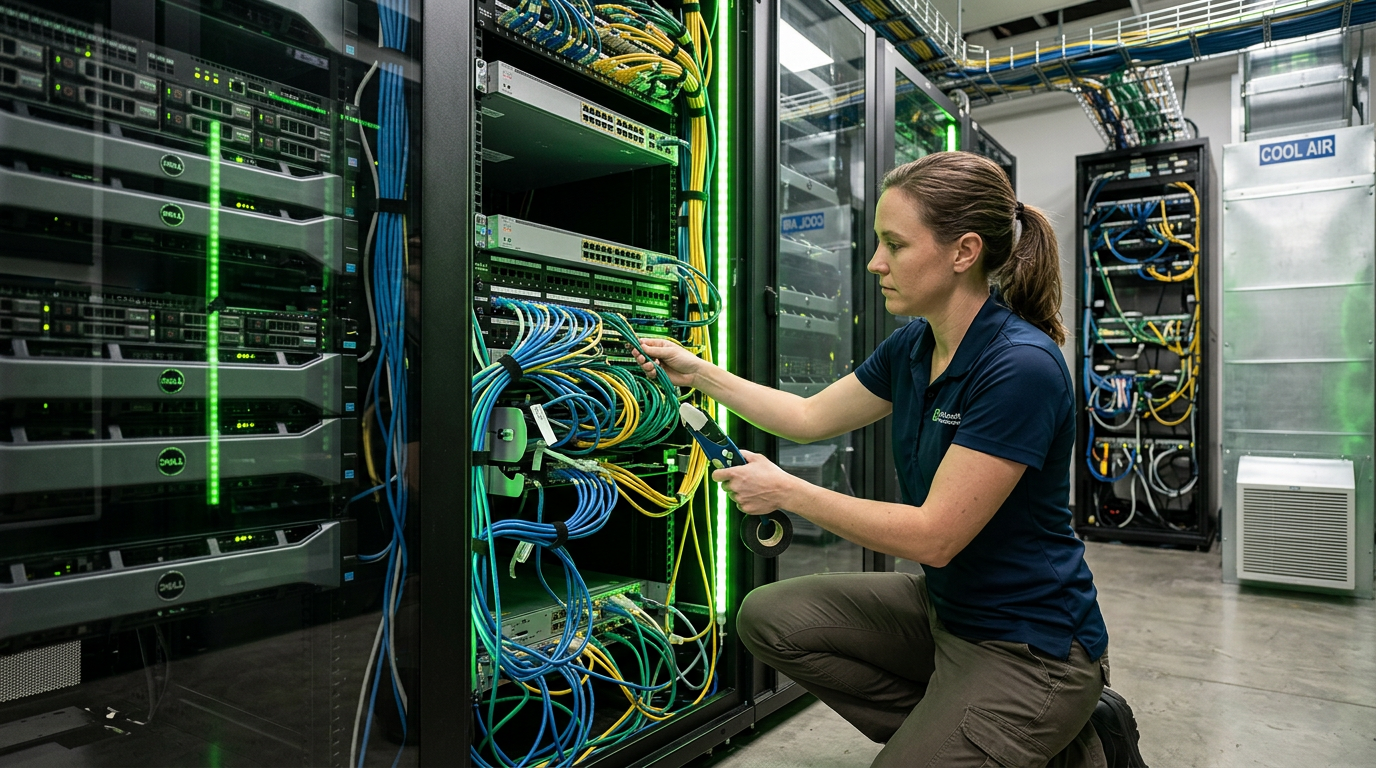
For a facilities manager or IT director in Central Florida, the weather forecast isn’t just about choosing an umbrella—it’s about monitoring the health of your building’s nervous system. While we often focus on keeping the lobby cool for customers, the spaces where your data lives—riser closets, warehouse ceilings, and outdoor security poles—are battling a relentless environment of 90-degree days and 80% humidity.
In an Orlando commercial environment, heat and moisture aren't just uncomfortable; they are physical threats to your network’s integrity. If you’ve noticed intermittent connectivity drops or a sudden decrease in data speeds as the afternoon sun hits your building, you might be dealing with the physical degradation of your structured cabling.
The Physics of Heat: Why Your Network Slows Down
It is a common misconception that data transmission is purely digital and unaffected by temperature. In reality, structured cabling relies on copper conductors, and copper is highly sensitive to heat.
As the temperature rises, insertion loss (attenuation) increases. This means the signal weakens as it travels along the cable. Industry standards, such as those set by TIA/EIA, typically base cable length limits (like the 100-meter rule for Cat6) on an ambient temperature of 20°C (68°F).
In a Central Florida warehouse or a ceiling plenum that reaches 110°F or higher, that 100-meter limit effectively shrinks. If your cable runs were installed at the maximum length without accounting for "temperature de-rating," your network may experience packet loss and re-transmissions, which manifests to the end-user as a "slow" connection.
Humidity and the Corrosion Factor
While heat slows the signal, humidity physically destroys the hardware. In high-traffic facilities like hospitality or retail, moisture can seep into wall jacks and patch panels.
- Oxidation: High humidity accelerates the oxidation of copper contacts. This creates a thin layer of non-conductive material on the pins, leading to intermittent failures or PoE (Power over Ethernet) arcing.
- Jacket Permeability: Standard PVC-jacketed cables are not waterproof. Over years of exposure to high humidity, moisture can penetrate the jacket, altering the electrical properties of the twisted pairs inside.
- Condensation in Conduits: When warm, moist air meets a cooler surface (like an air-conditioned server room wall), condensation forms. If your exterior conduits aren't properly sealed, they act as straws, pulling humid air into your sensitive IT enclosures.
The Hidden Threat: Pests and Heat
It isn't just the climate—it’s the ecosystem that thrives in it. As Central Florida temperatures rise, pests like rodents and ants seek shelter in the relative safety of cable trays and conduits.
Rodents are notorious for gnawing on cable jackets to sharpen their teeth, but "crazy ants" are a specific localized threat to Orlando businesses. These insects are attracted to electrical fields and can swarm inside junction boxes and switches, causing shorts and equipment failure. A well-sealed cabling system isn't just about signal—it's about pest prevention.
Actionable Solutions for Florida Facilities
If you are managing a facility in the Sunshine State, here are four practical steps to protect your infrastructure:
1. Specify Plenum-Rated and Shielded Cables
In high-heat ceiling environments, use high-quality plenum-rated (CMP) cables. For outdoor runs—such as those connecting Digital Signage or Security Cameras in parking lots—ensure you are using Outside Plant (OSP) rated cable with water-blocking technology (gel-filled or water-swellable tape).
2. Implement Active Cooling in IDFs
Don't treat your Intermediate Distribution Frames (IDFs) like janitor closets. If your switches are running in a room without airflow, the heat generated by the hardware combined with the ambient Orlando humidity creates a localized "greenhouse effect." Simple ventilation or dedicated small-scale cooling units can double the lifespan of your gear.
3. Use Temperature De-rating During Design
When planning a new build or expansion, work with a partner who understands temperature de-rating factors. If a cable run must pass through a hot warehouse ceiling, the physical length of that run should be shortened to ensure the signal remains within TIA performance standards.
4. Seal Your Conduits
Use duct seal or specialized foam to plug the ends of conduits that travel from the exterior to the interior. This prevents the "chimney effect," where humid outdoor air is sucked into your climate-controlled server room, preventing condensation on your patch panels.
Building for Resilience
At InCTRL Technology Services, we understand that a cabling system in Orlando has a harder job than one in a cooler climate. By prioritizing environmental factors during the design and installation phase, you can avoid the "mystery" network drops that plague so many local businesses during the summer months.
Your structured cabling is a long-term investment. Don't let the Florida humidity turn it into a short-term liability.
Sources
- [Reed Nissan Orlando Blog | Nissan Dealership in Orlando, FL](https://www.reednissan.com/blog)
- [Choosing the Right Structured Cabling Contractors for Your ...](https://www.irfcabling.com/post/choosing-the-right-structured-cabling-contractors-for-your-orlando-property)
- [Essential Considerations for Data Cabling in Commercial Spaces](https://electrician-botany.com/essential-considerations-for-data-cabling-in-commercial-spaces)
InCTRL Technology Team
Commercial integration specialists with 20+ years installing security, cabling, signage, AV and IT systems across Central Florida. About us
Explore our services
Areas we serve
Need This Done at Your Facility?
Orlando-based since 2004 — 3,300+ jobs completed. Talk to a real technician, not a call center.