Is a high-brightness display required for Florida retail digital signage?
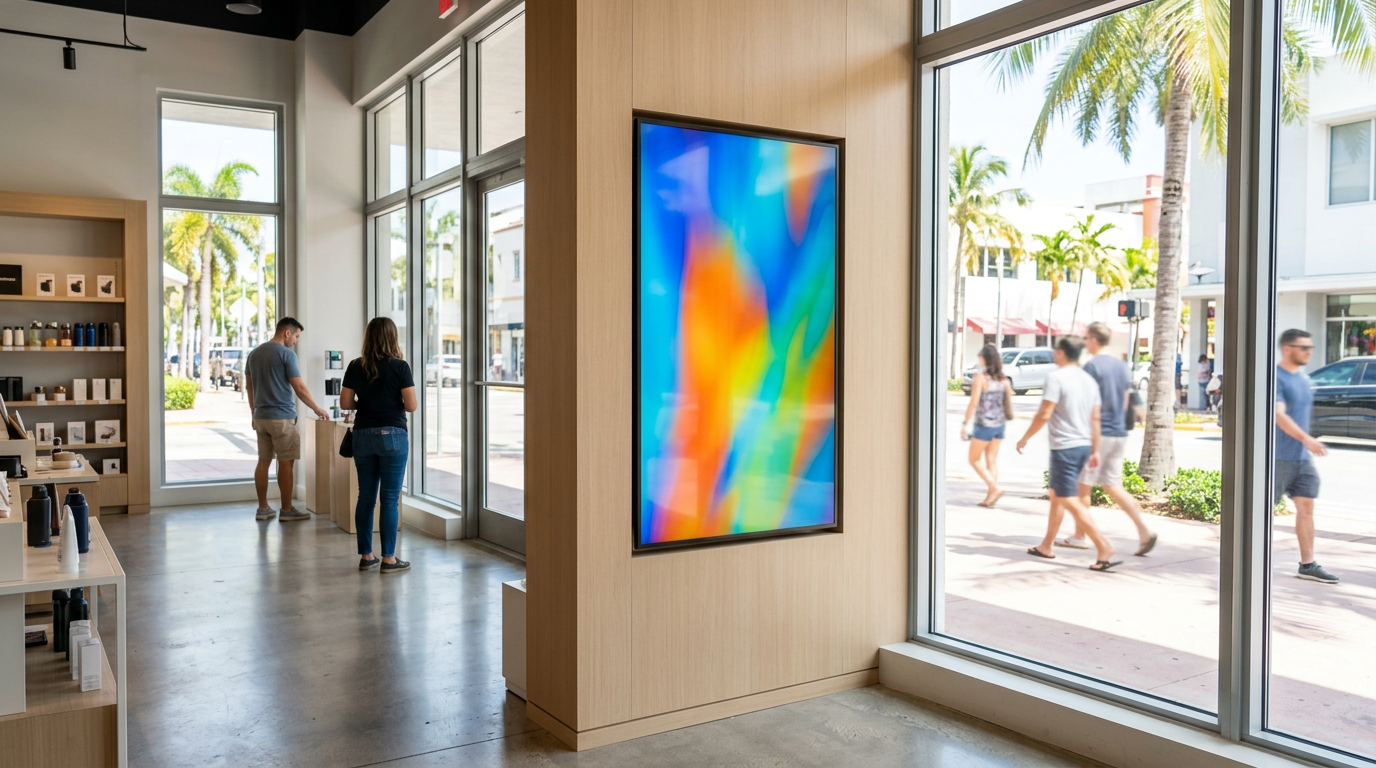
A high-brightness display of 2,500 to 3,500 nits is required for any Central Florida storefront window to overcome direct sunlight. Standard 500-nit commercial screens will wash out completely in high-ambient light, rendering content invisible to passing traffic during peak daylight hours.
A high-brightness display of 2,500 to 3,500 nits is required for any Central Florida storefront window to overcome direct sunlight. Standard 500-nit commercial screens will wash out completely in high-ambient light, rendering content invisible to passing traffic during peak daylight hours.
Quick Facts
- Brightness Standard: Storefront window displays require 2,500 to 3,500 nits; standard indoor commercial displays typically offer only 350 to 700 nits.
- Heat Tolerance: High-brightness units are rated to withstand surface temperatures up to 230°F (110°C) to prevent "blackening defects" caused by solar loading.
- Duty Cycle: Commercial-grade signage is rated for 24/7 or 16/7 operation, whereas consumer TVs are designed for 6–8 hours of daily use.
- Polarized View: Premium high-brightness panels remain visible to customers wearing polarized sunglasses, a critical factor for Florida drivers and pedestrians.
- Light Sensors: Integrated sensors automatically dim the screen at night to comply with local light pollution ordinances and reduce energy costs.
| Display Type | Typical Brightness | Best For | Ballpark Cost (55") |
|---|---|---|---|
| Standard Commercial | 350 - 500 Nits | Indoor hallways, breakrooms | $800 - $1,500 |
| High-Ambient Indoor | 700 - 1,000 Nits | Bright lobbies, near skylights | $1,800 - $2,800 |
| Window-Facing High-Bright | 2,500 - 4,000 Nits | Storefronts, direct sun exposure | $3,500 - $6,500 |
The Impact of Solar Loading and Blackening
In Central Florida, the sun does more than just wash out the image on a screen. When a standard LCD panel is placed in a south-facing window, the liquid crystals can physically overheat and reach a "clearing point." This results in large, permanent black blotches on the screen, known as blackening defects.
High-brightness commercial displays use specialized thermal management systems and high-temperature liquid crystals. These components allow the display to operate in direct sunlight without the panel failing. While a consumer TV might last a few weeks in an Orlando storefront before the image degrades, a purpose-built high-brightness display is designed to last 50,000 to 100,000 hours in those same conditions.
Nits vs. Lumens: Understanding Visibility
Visibility in retail signage is measured in nits (candela per square meter). For an indoor menu board at a restaurant in a shaded mall, 500 nits is sufficient. However, the ambient light in a Florida parking lot can exceed 10,000 nits. To create enough contrast for a human eye to read text or see a video through a glass pane, the display must push at least 2,500 nits.
Choosing a lower-nit screen to save on initial capital expenditure often results in a total loss of ROI. If the content is not visible from 10:00 AM to 4:00 PM, the signage fails its primary purpose of driving foot traffic. Furthermore, high-brightness displays often include anti-reflection coatings that minimize the "mirror effect" common on standard glass windows.
What This Means in Central Florida
Orlando and the surrounding 200-mile radius face extreme UV exposure and humidity. Storefront displays must account for the greenhouse effect created by window glass, which traps heat against the hardware. Installation teams must ensure proper airflow within the window enclosure to prevent premature backlight failure. Additionally, coastal businesses near Tampa or Daytona must consider the impact of salt air on internal components, favoring displays with conformal coatings on the circuit boards.
Frequently Asked Questions
Can I just use a high-end consumer TV for my storefront window?
No. Consumer TVs rarely exceed 300–600 nits and lack the thermal management to survive Florida sun. The panel will likely suffer from blackening defects within the first summer, and the manufacturer's warranty will be voided because the unit was used in a commercial application.
How much power does a high-brightness display consume?
High-brightness displays require more power to drive the intense backlight, often consuming 3 to 5 times more electricity than a standard indoor screen. However, most commercial units include ambient light sensors that dim the display at night, significantly reducing total energy consumption and extending the life of the LEDs.
Do these screens work for customers wearing polarized sunglasses?
Standard LCD screens often appear black or distorted when viewed through polarized lenses at certain angles. Professional high-brightness displays utilize Quarter Wave Plate (QWP) technology, which ensures the screen remains perfectly visible to customers wearing sunglasses, a vital feature for Florida retail environments.
What is the typical lifespan of a commercial digital signage display?
Most commercial-grade displays are rated for 50,000 to 100,000 hours of continuous use. In a retail environment operating 12 hours a day, this translates to roughly 10 to 20 years of service, though most businesses refresh their technology every 5 to 7 years to stay current with software and resolution standards.
Is professional installation required for these displays?
Yes, primarily due to weight and heat. A 55-inch high-brightness display can weigh significantly more than a standard TV, requiring specialized commercial mounts. Furthermore, installers must ensure the structured cabling and power delivery are rated for the higher load and that the mounting position allows for adequate ventilation.
---
Planning a project like this? See our [digital signage installation services](/services/digital-signage) or [get a free site assessment](/contact) from InCTRL's Orlando team.
Sources
- [Digital Signage for Business: What It Is and How to Use It Effectively](https://3dsignfactory.us/digital-signage-for-business-what-it-is-and-how-to-use-it-effectively/)
- [Digital Signage Pricing: How Much Does It Really Cost In 2026?](https://www.megasigninc.com/blog/digital-signage-pricing-rates-cost-hardware-pricelist/)
- [Top 10 Brands of LCD Digital Signage Solutions Provider - EIN Presswire](https://www.einpresswire.com/article/950043797/top-10-brands-of-lcd-digital-signage-solutions-provider-why-choose-best-sdt)
InCTRL Technology Team
Commercial integration specialists with 20+ years installing security, cabling, signage, AV and IT systems across Central Florida. About us
Explore our services
Areas we serve
Need This Done at Your Facility?
Orlando-based since 2004 — 3,300+ jobs completed. Talk to a real technician, not a call center.