Modernizing Access Control for Orlando’s Historic Landmarks
Learn how historic Orlando properties balance preservation with modern security using cloud-based and on-premise keyless entry solutions.
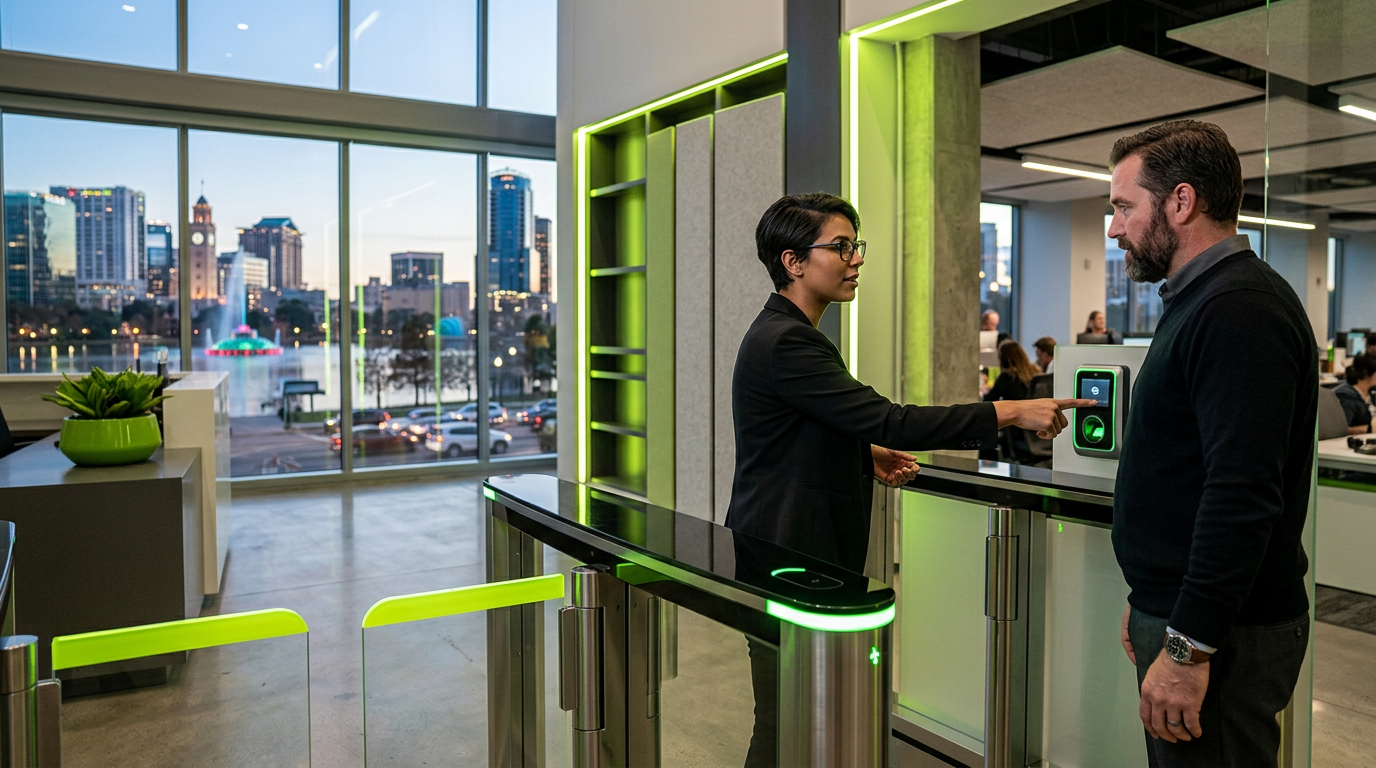
Walk through the brick-lined streets of Downtown Orlando, and you’ll see the architectural evolution of Central Florida. From the historic facades of Church Street to the repurposed warehouses in the North Quarter, these buildings face a unique modern challenge: how do you integrate 21st-century keyless entry into a structure built long before the invention of the internet?
For property managers and owners of historic commercial assets, the transition from heavy brass keys to digital credentials isn't just about convenience—it’s about risk mitigation and operational efficiency. However, the installation process in a landmark building requires a significantly different approach than a standard "white box" retail build-out.
The Preservation Paradox
When modernizing a historic landmark, the primary constraint is often the building's physical integrity. Thick masonry, lath-and-plaster walls, and heritage woodwork make traditional wiring projects difficult. In these environments, the industry is seeing a major shift toward AI-integrated surveillance and streamlined access points that minimize the physical footprint of the install.
As seen in recent nationwide retail security shifts, property managers are increasingly moving away from high-overhead manned guarding in favor of autonomous security devices and smart access control. In Orlando's historic districts, this transition is taking two distinct paths: Cloud-Native Mobile Access and Traditional On-Premise Hardwired Systems.
Approach 1: Cloud-Native Mobile Access
Cloud-based systems utilize encrypted Bluetooth or NFC (Near Field Communication) signals, allowing employees and tenants to use their smartphones as digital keys. This approach typically involves smaller, sleeker reader hardware that mounts easily to various surfaces.
When Cloud-Native Wins:
- Minimal Invasive Work: Because much of the logic lives in the cloud, these systems often require less complex local networking infrastructure, making them ideal for buildings where cutting into walls is prohibited.
- Scalability for Distributed Teams: Managing a retail chain or a multi-tenant hospitality site from a single dashboard is seamless. You can revoke access instantly from a smartphone app without needing to be on-site.
- Integration with AI Surveillance: Modern cloud platforms often plug directly into AI-driven video analytics, allowing the system to verify that the person using the badge matches the person on the camera feed in real-time.
Approach 2: On-Premise Hardwired Systems
Traditional on-premise systems involve a dedicated local server and physical wiring (often Category 6 cabling) running from every door to a central data closet. This is the "tried and true" method for high-security environments like healthcare or corporate headquarters.
When On-Premise Wins:
- Redundancy and Reliability: These systems do not rely on an internet connection to function. If the building loses its WAN connection, the internal security database remains fully operational.
- Maximum Control: For organizations with strict compliance requirements (like HIPAA in healthcare or Gov-spec), keeping all data on a local, air-gapped server provides a level of sovereign control that the cloud cannot always match.
- Long-Term Lifecycle: While the initial installation is more labor-intensive—especially in historic buildings requiring specialized structured cabling techniques—the hardware often has a longer operational lifecycle before needing a firmware or software overhaul.
Bridging the Gap with Structured Cabling
Whether a landmark opts for cloud or on-premise, the success of the installation hinges on the infrastructure behind the walls. In historic Orlando properties, we often deploy Power over Ethernet (PoE) technology to simplify the power requirements of these systems.
Instead of running separate high-voltage electrical lines to every door (which requires a licensed electrician and significant wall damage), PoE allows us to deliver both data and power through a single, thin Ethernet cable. This is a game-changer for maintaining the "premium aesthetic" often required in high-end retail and boutique hospitality landmarks.
The AI Influence on Access Control
Following the trend of AI-driven public safety, modern access control is no longer a "dumb" lock. Modern systems now utilize video intelligence to recognize patterns. For example, if a door is propped open in a warehouse or a retail stockroom, the system can automatically trigger a nearby PTZ (Pan-Tilt-Zoom) camera to focus on that specific zone and alert security personnel immediately.
This shift toward autonomous monitoring is helping commercial clients reduce security costs by 35% to 80% compared to traditional manned guarding, as the technology acts as a force multiplier for existing staff.
Making the Right Choice for Your Property
If you are managing a historic landmark in the Orlando area, your choice between cloud and on-premise should be dictated by your building’s physical limitations and your long-term management goals.
- Choose Cloud if you value rapid deployment, remote management, and minimal structural impact.
- Choose On-Premise if you have a high-security requirement, a stable IT staff to manage local servers, and the ability to perform more extensive cabling.
Modernizing a landmark doesn't mean compromising its history. By selecting the right technology partner and installation strategy, you can protect your building’s legacy while providing the modern security your tenants expect.
Sources
- [RAD Converts Retail Security Pilot into Long Term Deployment |](https://radsecurity.com/press-releases/rad-converts-retail-security-pilot-into-long-term-deployment)
- [AITX's RAD Converts Retail Security Pilot into Long Term Deployment](https://finance.yahoo.com/sectors/technology/articles/aitxs-rad-converts-retail-security-124000698.html)
- [A $14 billion AI shift is changing how public safety actually works](https://www.thestreet.com/technology/a-14-billion-ai-shift-is-changing-how-public-safety-actually-works)
InCTRL Technology Team
Commercial integration specialists with 20+ years installing security, cabling, signage, AV and IT systems across Central Florida. About us
Explore our services
Areas we serve
Need This Done at Your Facility?
Orlando-based since 2004 — 3,300+ jobs completed. Talk to a real technician, not a call center.