Does my Florida commercial kitchen require stainless steel conduit?
Florida commercial kitchens generally require stainless steel or liquid-tight conduit for security cameras located within six feet of food prep surfaces or under exhaust hoods. Local health codes and NEC standards mandate non-corrosive, easy-to-clean raceways to prevent food contamination and withstand high-heat washdowns.
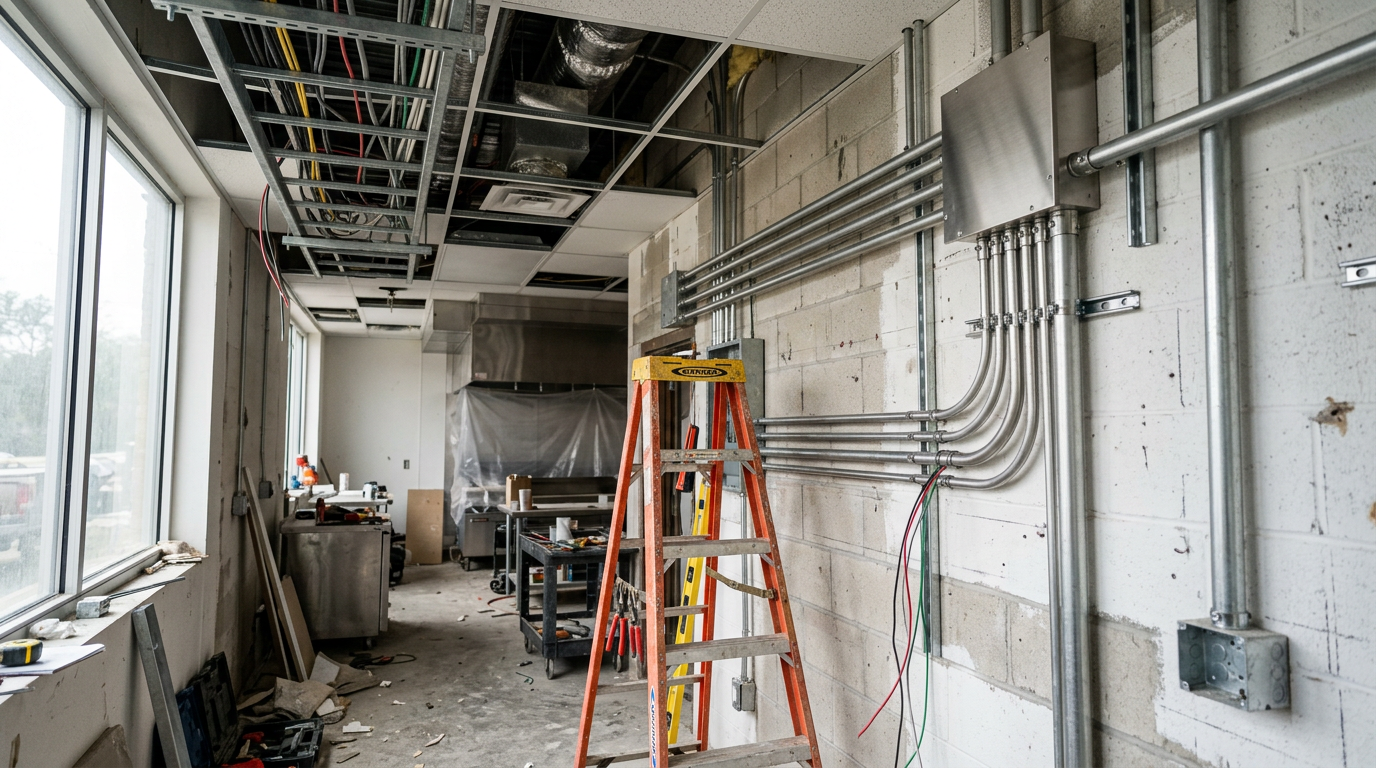
Florida commercial kitchens generally require stainless steel or liquid-tight conduit for security cameras located within six feet of food prep surfaces or under exhaust hoods. Local health codes and NEC standards mandate non-corrosive, easy-to-clean raceways to prevent food contamination and withstand high-heat washdowns. While standard EMT is common in dining areas, kitchen production zones often demand specialized materials to pass health inspections.
Quick Facts
- Health Code Compliance: Florida Department of Business and Professional Regulation (DBPR) inspectors require non-porous, smooth surfaces in food zones.
- Corrosion Resistance: Stainless steel 304 or 316 grade prevents rust caused by steam, grease, and caustic cleaning chemicals.
- Installation Height: Cameras mounted below 8 feet in high-traffic prep areas usually require physical protection via rigid conduit.
- Heat Ratings: Conduit near fryers or ovens must withstand ambient temperatures exceeding 120°F without degrading.
- Ingress Protection: Security cameras in kitchens should carry an IP66 or IP67 rating to handle daily pressure washing and steam.
| Conduit Type | Typical Cost (Installed) | Best For |
|---|---|---|
| Stainless Steel (Rigid) | $45 - $85 per linear foot | Open food prep, high-heat zones, and luxury displays. |
| Liquid-Tight Flexible (LFMC) | $15 - $30 per linear foot | Tight corners, vibrating equipment, and short drops to cameras. |
| EMT (Electrical Metallic Tubing) | $8 - $15 per linear foot | Dry storage, walk-in exteriors, and back-of-house hallways. |
Health Department and NEC Standards
The primary driver for stainless steel conduit is sanitation, not just electrical safety. Florida health inspectors follow FDA Food Code standards which stipulate that all equipment in food zones must be "smooth, durable, and easily cleanable." Standard galvanized EMT conduit has a rougher surface that can trap airborne grease and bacteria. Over time, the zinc coating on EMT can flake off into food, leading to inspection failures.
National Electrical Code (NEC) Article 344 also plays a role. In areas subject to severe corrosive influences, such as commercial dishwashing stations or citrus processing zones common in Florida, the code mandates materials specifically judged for the environment. Stainless steel is the industry standard for these high-moisture, high-acid environments.
When Liquid-Tight is a Valid Alternative
Not every inch of a kitchen requires rigid stainless steel. Liquid-tight flexible metal conduit (LFMC) is often used for the final three to six feet of a camera run. This allows for easier positioning of the camera while maintaining a sealed environment that prevents moisture from entering the junction box.
In Florida commissary kitchens or mobile units, space is at a premium. Using flexible, food-grade non-metallic conduit can be a cost-effective way to meet code in tight corners where rigid piping is impossible to bend. However, this must still meet the "smooth and cleanable" requirement to satisfy a DBPR inspector.
The Impact of Grease and Heat
Commercial kitchens are brutal environments for electronics. Security cameras mounted near exhaust hoods are exposed to constant heat and vaporized fats. Standard PVC conduit can warp or off-gas when exposed to extreme heat from a charbroiler or pizza oven. Stainless steel acts as a heat sink and physical barrier, protecting the Cat6 cabling inside from melting or becoming brittle.
Furthermore, the cleaning process in Florida restaurants often involves high-pressure sprayers and degreasers. Aluminum or galvanized steel conduit will oxidize rapidly under these conditions, turning white and chalky. Stainless steel maintains its integrity, ensuring the security system remains functional for the full 5-to-10-year lifecycle of the hardware.
What This Means in Central Florida
In the Orlando area, high humidity levels accelerate the corrosion of inferior metals in kitchen environments. Facilities near the coast must also contend with salt air, which can penetrate ventilation systems and cause standard EMT to rust from the outside in. Local permitting offices in Orange, Osceola, and Lake Counties are increasingly strict about low-voltage wiring in food service establishments. Expect inspectors to check that all penetrations through walk-in coolers or fire-rated kitchen walls are properly sealed with food-grade silicone or firestop putty.
Frequently Asked Questions
Can I use exposed Cat6 cable in a commercial kitchen?
Exposed cabling is generally prohibited in food preparation areas. Grease buildup on the cable jacket is a fire hazard and a sanitation violation. All low-voltage wiring should be housed in conduit or ran behind the wall to meet Florida building and health codes.
Is PVC conduit allowed for kitchen security cameras?
While PVC is moisture-resistant, many local Florida jurisdictions restrict its use in commercial kitchens due to smoke toxicity concerns during a fire. Additionally, PVC is difficult to degrease and can crack if hit by heavy cookware, making it less ideal than metal options.
Do I need a specific type of camera for a kitchen?
Yes, you should use a "dome" style camera with an IK10 impact rating and an IP67 moisture rating. The housing should be resistant to chemical cleaners. Avoid cameras with exposed cooling fans, as these will quickly clog with airborne grease and fail.
How much more does stainless steel conduit cost than standard EMT?
Stainless steel materials can cost 5 to 10 times more than standard galvanized EMT. Labor is also higher because stainless steel is significantly harder to cut and thread. For a typical 20-foot run, expect to pay a premium of $600 to $1,000 per camera location.
Does the conduit need to be grounded in a kitchen?
Yes, even for low-voltage security cameras, metal conduit systems must be properly bonded and grounded according to NEC standards. This is especially vital in kitchens where equipment is frequently moved and the risk of electrical faults near water sources is high.
---
Planning a project like this? See our [security camera installation services](/services/security-cameras) or [get a free site assessment](/contact) from InCTRL's Orlando team.
Sources
- [Commercial Security Camera Laws in Florida (2026 Guide)](https://getsafeandsound.com/blog/security-camera-laws-in-florida/)
- [Mobile Kitchen Sanitation Procedures & Permit Codes [2026]](https://www.mobileculinaire.com/resource-center/mobile-kitchen-code-permit?srsltid=AU7gw4U1ukTPpg2Z-PQZ6FlKAfoO3UybZT6umT3raHvRGMF3FHHEBBG3)
- [How to Start a Commissary Kitchen in 2026: A Complete Guide](https://cloudkitchens.com/blog/starting-a-commissary-kitchen)
InCTRL Technology Team
Commercial integration specialists with 20+ years installing security, cabling, signage, AV and IT systems across Central Florida. About us
Explore our services
Areas we serve
Need This Done at Your Facility?
Orlando-based since 2004 — 3,300+ jobs completed. Talk to a real technician, not a call center.