Logistics Efficiency: The Strategic Role of High-Def Surveillance
Discover how integrated surveillance systems resolve cargo disputes and optimize dock operations in Florida's busiest logistics hubs.
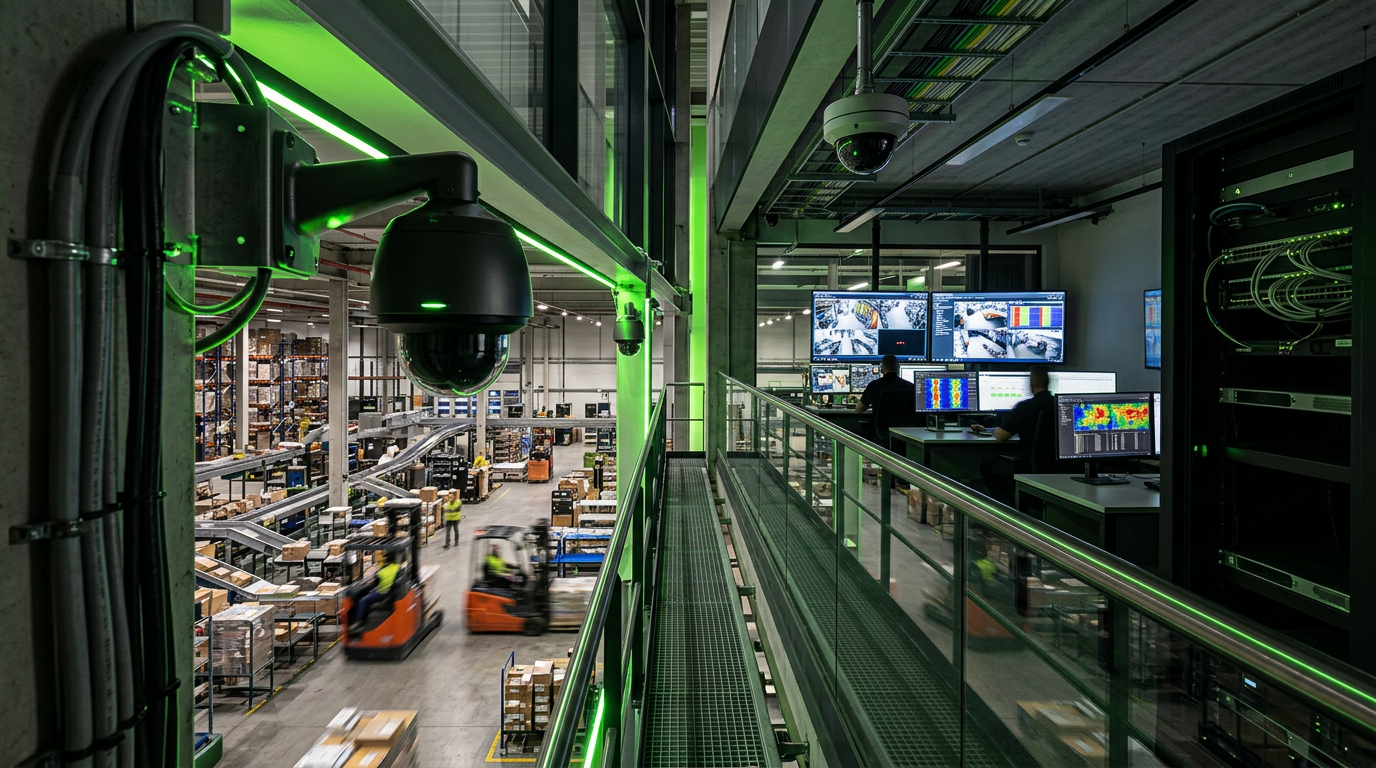
A logistics manager at a major distribution hub in Central Florida recently faced every warehouse leader’s worst nightmare: a $45,000 shipment of high-value electronics was reported missing by the recipient. The paperwork showed the pallet was loaded, but the destination terminal claimed the trailer arrived short.
The manager went to pull the camera footage, only to find a grainy, low-resolution blur. Because the legacy cameras were poorly positioned and lacked modern low-light sensors, it was impossible to read the pallet ID tags or confirm the exact time of loading. The claim was lost, the insurance premium spiked, and the lesson was clear: If your security system can’t provide forensic-level detail, it isn’t an asset—it’s a liability.
In the high-stakes world of Florida logistics, from the Port of Tampa to the I-4 corridor warehouses, security cameras are no longer just about deterring theft. They are critical tools for operational intelligence and risk mitigation.
The Shift from Surveillance to Business Intelligence
Modern commercial camera systems have evolved far beyond the "closed-circuit" models of the past. Today, integrated IP-based systems serve as the eyes of the operation, providing data that helps facility managers make better decisions.
When we design systems for logistics clients, we focus on three primary areas where technology impacts the bottom line:
- Loss Prevention and Chain of Custody: High-definition 4K cameras at loading docks can capture individual tracking numbers on boxes. If a discrepancy arises, managers can quickly verify exactly what entered or exited a trailer.
- Operational Throughput: By analyzing traffic patterns on the warehouse floor, managers can identify bottlenecks where forklifts are congregating or where aisle congestion is slowing down picking speeds.
- Safety Compliance: AI-enabled analytics can now detect if employees are wearing proper PPE or if a spill has occurred in a high-traffic zone, triggering immediate alerts to supervisors.
Why Network Infrastructure is the Backbone
A common mistake in large-scale logistics facilities is focusing solely on the camera hardware while neglecting the Structured Cabling that supports it. A high-resolution camera is only as good as the bandwidth available to transmit its data.
In expansive warehouse environments, traditional copper Ethernet reach is limited to 100 meters. For a 200,000-square-foot facility, this requires a strategic network design utilizing fiber optic backbones and localized IDF (Intermediate Distribution Frame) closets. Without a robust cabling architecture, you’ll experience dropped frames and lag—precisely the kind of failures that lead to the field-failure story mentioned above.
Integrating Digital Signage for Floor Communication
Efficiency in logistics also relies on the rapid communication of data. We are seeing an increasing trend of integrating Digital Signage with facility management systems.
Instead of static posters, warehouses are utilizing high-brightness displays to show real-time metrics, such as:
- Live dock status (which bays are occupied/available).
- Safety milestones and daily KPIs.
- Urgent weather alerts for drivers and floor staff.
When these displays are integrated into the broader technology ecosystem, they turn raw data from the security and logistics software into actionable information for the entire team.
Choosing the Right Integration Partner
As we look toward the technology standards of 2026, the criteria for choosing an integrator have shifted. It is no longer enough to find a company that can mount a camera to a wall. Logistics leaders now look for partners who understand Network Alignment and Multi-site Rollouts.
Whether you are managing a single facility in Tampa or a chain of distribution centers across the Southeast, your technology partner should provide:
1. System Interoperability: Ensuring your cameras, access control, and AV systems work on a unified platform.
2. Scalability: A design that allows you to add features like license plate recognition (LPR) or thermal imaging as your budget and needs grow.
3. Project Management Excellence: In the logistics world, downtime is not an option. Professional project management ensures that installations happen without disrupting the flow of goods.
Final Thoughts
Enhancing logistics efficiency goes "beyond the terminal" by creating a transparent, data-driven environment. By investing in high-quality surveillance and the structured cabling required to support it, Florida businesses can protect their margins, ensure employee safety, and gain a competitive edge in an increasingly automated industry.
If your current system leaves you guessing when a shipment goes missing, it’s time to stop looking at security as a cost center and start seeing it as a vital component of your operational success.
Sources
- [8 Best Commercial AV Integrators in 2026 (Buyer's Guide)](https://thenetworkinstallers.com/blog/best-commercial-av-integrators/)
- [Top AV Integrators in the US: 2026 Shortlist - CrownTV](https://www.crowntv-us.com/blog/top-av-integrators-usa/)
- [Corporate AV Solutions | Conference Rooms | UCC - Visual Sound](https://visualsound.com/audio-visual-markets/corporate-av/)
InCTRL Technology Team
Commercial integration specialists with 20+ years installing security, cabling, signage, AV and IT systems across Central Florida. About us
Explore our services
Areas we serve
Need This Done at Your Facility?
Orlando-based since 2004 — 3,300+ jobs completed. Talk to a real technician, not a call center.