AI Ethics & Florida Privacy Law: Upgrading Commercial Security
Discover how evolving privacy laws and AI ethics are reshaping commercial security camera installations for Orlando businesses.
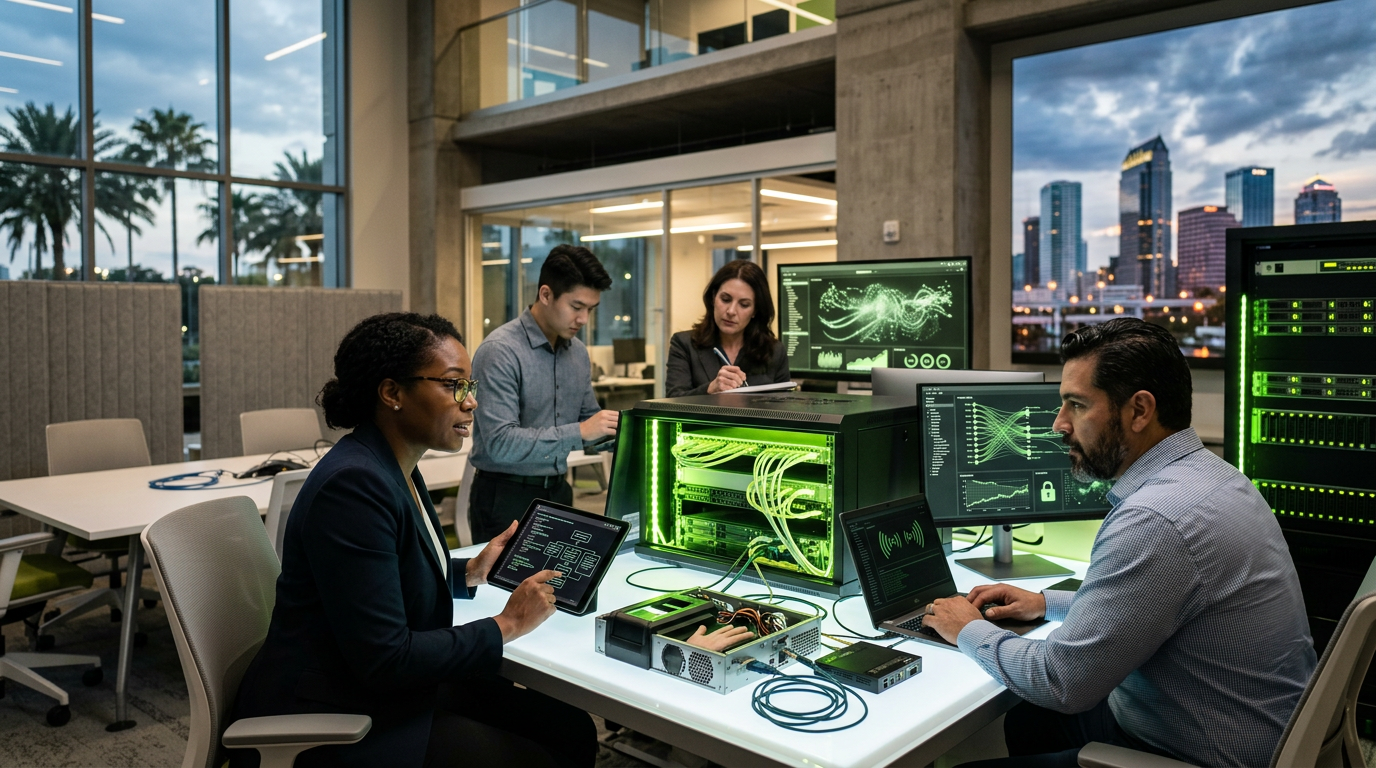
As the global security camera market surges toward a projected $80 billion valuation by 2026, a new tension has emerged in the corridors of Orlando’s commercial districts. Business owners are no longer just asking about megapixels and low-light performance; they are asking about compliance.
With the integration of Artificial Intelligence (AI) into modern surveillance, the line between proactive security and privacy infringement has thinned. For Central Florida businesses—from sprawling hospitality resorts to high-traffic retail chains—navigating the intersection of AI ethics and privacy legislation is now a critical component of any physical security strategy.
The Shift: From Reactive Recording to Proactive Intelligence
Traditional security systems were largely forensic tools. If a theft occurred, you checked the tape. However, modern AI-driven systems utilize facial recognition, behavioral analytics, and automated license plate recognition (ALPR) to identify threats before they escalate.
While these technologies offer unparalleled safety, they trigger complex ethical and legal questions. Florida’s privacy landscape is evolving to address how biometric data is stored, who has access to it, and how long it can be retained.
Real-World Comparison: The Compliance Evolution
To understand the impact of these changes, let’s look at a typical transition for a large-scale commercial facility in the Orlando area.
The "Before" Scenario: Legacy Surveillance
- Technology: Analog or basic IP cameras with a standard Network Video Recorder (NVR).
- Privacy Approach: Signage indicating "CCTV in use," but no formal data governance policy.
- The Risk: Data was often stored on unencrypted drives. AI features, if present, were used without clear disclosure to employees or customers.
- Outcome: High vulnerability to data breaches and potential litigation if biometric data was mishandled or shared with third parties without consent.
The "After" Scenario: AI-Ethical Integration
- Technology: NDAA-compliant 4K AI-enabled cameras with edge processing and end-to-end encryption.
- Privacy Approach: Implementation of "Privacy by Design." This includes automated blurring of non-essential faces in live feeds and strict role-based access control (RBAC).
- The Risk: Minimized by localized AI processing (edge computing), ensuring sensitive data never leaves the secure internal network unless a specific alert is triggered.
- Outcome: A 40% reduction in false alarms and a 100% compliance rating with current state data privacy statutes. The business demonstrates ethical leadership, building trust with both staff and the public.
Key Privacy Standards for Orlando Businesses
When planning a security camera installation, it is no longer enough to mount a lens and run a Cat6 cable. Professional integration now requires a deep dive into industry standards:
- NDAA Compliance: Ensuring the hardware used is not manufactured by entities restricted by the National Defense Authorization Act, a common requirement for government-adjacent or high-security commercial sites.
- Data Minimization: AI systems should only collect the data necessary for the specific security objective. If you only need to track vehicle counts, the system should be configured to ignore facial data.
- Transparent Disclosure: Clearly visible signage and accessible digital privacy policies that explain what AI is being used and for what purpose.
The Measurable Impact of Ethical AI
Adopting an ethically grounded AI security posture isn't just about staying out of court—it has tangible business benefits.
1. Reduced Liability Insurance: Many providers are beginning to offer lower premiums for businesses that use compliant, professional-grade surveillance systems that prioritize data security.
2. Operational Efficiency: AI can distinguish between a stray cat and a human intruder, reducing the "alert fatigue" experienced by security teams and lowering the cost of wasted man-hours.
3. Future-Proofing: By installing systems that meet rigorous ethical standards today, Orlando businesses avoid the massive "rip and replace" costs that occur when new, stricter privacy laws are passed.
Strategies for Implementation
If you are overseeing a commercial facility, the path forward involves three actionable steps:
- Conduct a Privacy Impact Assessment: Before installing AI-capable hardware, identify where data is captured, how it is stored, and who sees it.
- Prioritize Edge Processing: Seek cameras that process AI analytics on the device itself rather than sending raw footage to a cloud server, significantly reducing the surface area for a data breach.
- Work with Certified Integrators: Ensure your technology partner understands the nuances of Structured Cabling and IT Field Services to create a secure, closed loop for your video traffic.
As we look toward 2026 and beyond, the most successful security installations in Central Florida won't be the ones with the most cameras, but the ones with the most intelligent, ethical, and legally compliant frameworks.
Sources
- [Security Cameras Market Trends and Global Forecasts Report 2026 ...](https://finance.yahoo.com/sectors/technology/articles/security-cameras-market-trends-global-142200586.html)
- [Security Cameras Market Trends and Global Forecasts Report](https://www.globenewswire.com/news-release/2026/05/18/3296782/0/en/security-cameras-market-trends-and-global-forecasts-report-2026-2035-80-bn-opportunities-lie-in-expanding-dome-residential-segments-benefiting-from-technological-advancements-like-.html)
- [Best 4K Security Camera System for Business 2026 - YouTube](https://www.youtube.com/watch?v=e46REx9meQQ)
---
Planning a project like this? See our [security camera installation services](/services/security-cameras) or [get a free site assessment](/contact) from InCTRL's Orlando team.
InCTRL Technology Team
Commercial integration specialists with 20+ years installing security, cabling, signage, AV and IT systems across Central Florida. About us
Explore our services
Areas we serve
Need This Done at Your Facility?
Orlando-based since 2004 — 3,300+ jobs completed. Talk to a real technician, not a call center.