ADA Standards for Small Clinic Digital Signage in Florida
Learn how Florida healthcare facilities must balance ADA compliance with digital signage, from mounting heights to WCAG 2.1 contrast standards.
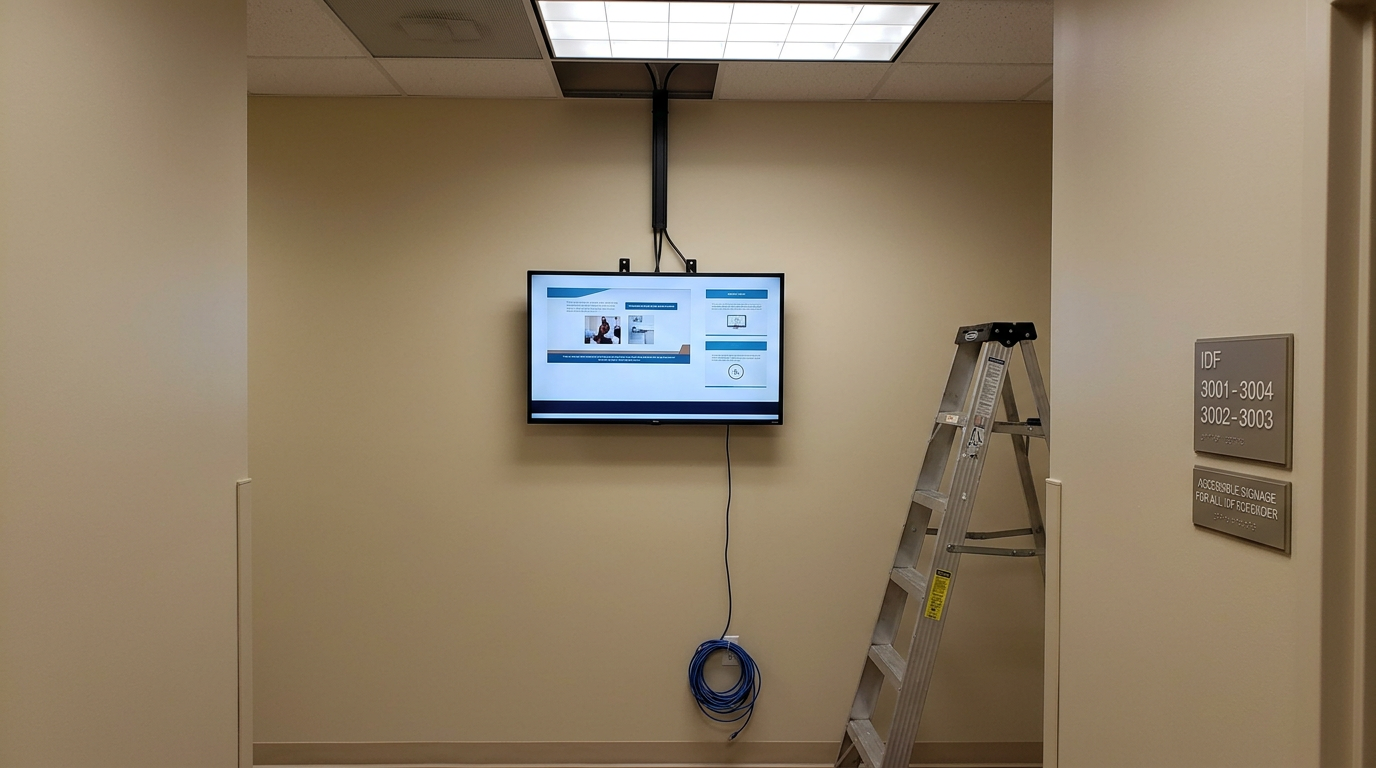
Digital signage in Florida clinics must follow ADA standards that dictate a mounting height between 48 and 60 inches for tactile elements, a maximum protrusion of 4 inches for wall-mounted displays, and high-contrast visuals meeting WCAG 2.1 Level AA. Compliance ensures accessibility for patients with visual or mobility impairments while avoiding costly code violations.
Quick Facts
- Mounting Height: Tactile components of signage must sit between 48 and 60 inches from the finished floor.
- Protrusion Limits: Displays mounted above 27 inches and below 80 inches cannot project more than 4 inches from the wall into a circulation path.
- Visual Contrast: Digital content should maintain a contrast ratio of at least 4.5:1 for standard text to meet WCAG 2.1 Level AA standards.
- Font Size: Text size on digital screens should scale based on viewing distance, typically starting at 5/8 inch for close-range viewing.
- Braille Requirements: Permanent room identifiers require Grade 2 Braille placed directly below the corresponding text.
Navigating Compliance in the Clinical Space
Small clinics often install digital displays for wayfinding, patient check-in, or health education. However, a screen is more than just a monitor; it is a structural element subject to the Americans with Disabilities Act (ADA) and the Florida Building Code. If a screen projects too far into a hallway, it becomes a hazard for patients using canes or those with limited vision.
Hardware selection matters as much as placement. Ultra-slim commercial displays are preferred because they often sit within the 4-inch protrusion limit without requiring a recessed wall pocket. If you use a standard mount that puts the screen 5 or 6 inches off the wall, you must install a cane detection rail or wing walls to stay compliant.
Content accessibility is the second half of the equation. Florida clinics are increasingly adopting the WCAG 2.1 Level AA standard for digital content. This involves using sans-serif fonts, avoiding flickering animations that trigger seizures, and ensuring color isn't the only way information is conveyed. For example, a "Wait Times" screen shouldn't just use red and green dots; it needs text labels or icons to be accessible to colorblind patients.
Cost-vs-Value Breakdown
Investing in compliant hardware upfront is cheaper than retrofitting a clinic after a failed inspection. Below are ballpark figures for small clinic setups in the current market.
| Item | Estimated Cost (Per Unit) | Value / Compliance Benefit |
|---|---|---|
| Slim-Profile Commercial Display (43"-55") | $800 – $1,400 | Fits 4" protrusion rule; 24/7 duty cycle. |
| ADA-Compliant Recessed Mount | $250 – $500 | Eliminates hallway hazards; clean aesthetic. |
| Professional Content Calibration | $400 – $900 | Ensures WCAG 2.1 contrast and font legibility. |
| Structural Backing & Cabling | $300 – $600 | Meets NEC standards and Florida fire codes. |
What This Means in Central Florida
In Central Florida, humidity and salt air (especially for coastal clinics in Volusia or Brevard counties) can degrade mounting hardware faster than in dry climates. We use galvanized or powder-coated brackets to prevent corrosion. Furthermore, Florida’s strict permitting process means that any digital signage integrated into a life-safety system—like displays that flash emergency alerts—must be cleared by local fire marshals.
Orlando-area clinics also deal with heavy afternoon thunderstorms and power surges. We specify surge protection at the rack and the display to protect the investment. When planning a layout, we account for the 2026 Florida Building Code, which emphasizes clear floor space for wheelchair maneuvering at interactive kiosks.
Frequently Asked Questions
Do all digital screens in a clinic need Braille?
No. Braille is required for permanent room signs, such as "Exam Room 1" or "Restroom." If a digital screen is used for dynamic content like news or weather, Braille is not required, but the screen must still follow protrusion and mounting height rules.
What is the 4-inch rule for wall-mounted displays?
Any object mounted between 27 inches and 80 inches above the floor cannot protrude more than 4 inches into walkways. This prevents people with visual impairments from bumping into the screen before their cane detects the base of the wall.
How does WCAG 2.1 Level AA apply to my clinic's lobby TV?
While WCAG primarily governs web content, it is the standard used for digital signage accessibility. It requires high contrast (4.5:1 ratio) and legible font sizes so that patients with low vision can read health announcements or queue numbers.
Can I just use a residential TV for my clinic signage?
Residential TVs are not designed for long run times and rarely meet the slim-profile requirements for ADA compliance without expensive recessed mounting. Commercial displays are thinner, brighter, and built to withstand the 12-14 hour days typical of healthcare facilities.
Are touchscreens required to have physical buttons?
Not necessarily, but interactive kiosks must be reachable from a wheelchair. The maximum high reach is 48 inches, and the low reach is 15 inches. If the interface is purely digital, it should include speech output or high-contrast modes for accessibility.
---
Planning a project like this? See our [digital signage installation services](/services/digital-signage) or [get a free site assessment](/contact) from InCTRL's Orlando team.
Sources
- [Healthcare website accessibility: what the law requires and how to keep up](https://www.siteimprove.com/blog/healthcare-digital-accessibility-compliance/)
- [ADA Sign Requirements in Florida: The 2026 Business Guide](https://www.bryanfabricationworks.com/blog/ada-sign-requirements-florida)
- [ADA Compliant Signage - Florida Graphic Services](https://fgs2.com/products/ada-compliant-custom-signage/)
InCTRL Technology Team
Commercial integration specialists with 20+ years installing security, cabling, signage, AV and IT systems across Central Florida. About us
Explore our services
Areas we serve
Need This Done at Your Facility?
Orlando-based since 2004 — 3,300+ jobs completed. Talk to a real technician, not a call center.