4K Security Integration for Orlando Logistics Hubs
Explore the pros and cons of NVR vs. Cloud surveillance architectures for Florida logistics hubs managing high-value inventory and rapid handoffs.
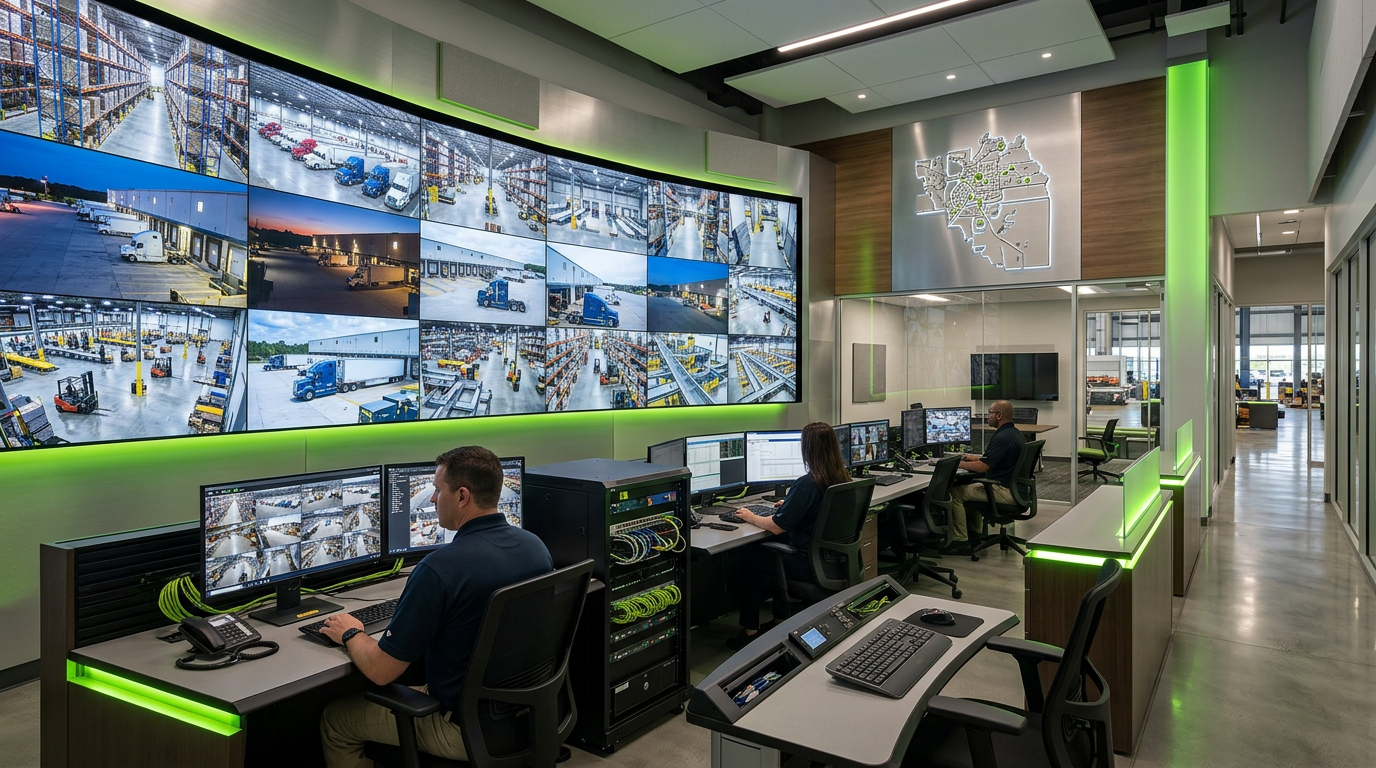
A tractor-trailer pulls into a bay at an Orlando distribution center. In the span of twenty minutes, $250,000 worth of electronics is unloaded, scanned, and cross-docked. By the time the bill of lading is signed, the inventory has changed hands three times. If a pallet goes missing or a box is damaged, a grainy 1080p image won't suffice to identify a serial number or an unclipped seal from thirty feet up.
In the Central Florida logistics corridor, where cargo throughput is reaching record highs in 2026, the "High-Stakes Handoff" is the most vulnerable moment in the supply chain. Integrating 4K security cameras is no longer about general surveillance; it is about forensic-level data capture.
However, the hardware is only half the battle. The real debate for facility managers lies in the architecture behind those lenses. When it comes to 4K integration, two philosophies dominate the industry: Local High-Performance NVRs versus Direct-to-Cloud AI Systems.
The Local Powerhouse: High-Performance NVRs
For massive warehouses—those spanning 200,000 square feet or more—the traditional Network Video Recorder (NVR) remains a heavyweight contender. This approach involves high-resolution cameras wired via Category 6A (Cat6A) cabling back to a localized server room.
When the NVR Wins:
- Bandwidth Conservation: Streaming thirty 4K cameras to the cloud 24/7 can cripple a standard commercial internet connection. Local NVRs process and store that heavy data on-site, only using bandwidth when a manager remotely views the footage.
- Frame Rate Control: In high-speed logistics, you need 30 frames per second (fps) to capture motion without blur. Local systems handle these high bitrates with ease.
- Storage Longevity: Many logistics contracts require 90 days of high-resolution retention. Storing petabytes of 4K data in the cloud can be cost-prohibitive compared to a localized RAID array.
The Agile Challenger: Direct-to-Cloud AI Platforms
On the other side of the spectrum are cloud-native systems. These cameras perform "edge processing," meaning the camera itself uses an onboard chip to analyze video, only sending relevant metadata (like a person detected or a vehicle plate) to the cloud, while storing the bulk video on internal solid-state drives.
When Cloud Integration Wins:
- Multi-Site Management: If you are managing three different hubs across Orlando and Tampa, a cloud platform provides a single pane of glass. No VPNs or complex networking required.
- Instant Searchability: Cloud systems excel at AI-driven search. You can search for "Red forklift" or "Blue semi-truck" across all cameras instantly, rather than scrubbing through hours of footage manually.
- Reduced Physical Footprint: Without the need for a dedicated server room and specialized cooling, these systems are simpler to maintain in satellite facilities or cross-docking stations.
The Infrastructure Backbone: Why Cabling Matters
Regardless of the system chosen, 4K resolution is unforgiving to poor infrastructure. A 4K stream requires significantly more throughput than the 720p systems of a decade ago.
At InCTRL Technology Services, we emphasize the importance of Structured Cabling as the foundation. We often see 4K cameras underperform because they are running on aging Cat5e lines that suffer from signal attenuation over long warehouse distances. Moving to Shielded Cat6A or even Fiber Optics for long runs ensures that the detail you paid for actually reaches the recording device.
Solving the "Industrial Camouflage" Problem
Effective security in a warehouse environment should be invisible yet omnipresent. This is the concept of industrial design in security—placing cameras at specific choke points where lighting is consistent and the "handoff" occurs.
- Loading Docks: Cameras should be mounted to capture the interior of the trailer as well as the dock plate.
- High-Bay Aisles: Long-range varifocal lenses are necessary to maintain 4K clarity at the end of a 300-foot aisle.
- Entry/Exit Points: License Plate Recognition (LPR) technology requires specific angles and infrared (IR) configurations to overcome headlight glare at night.
Making the Decision
Choosing between an NVR-based system and a Cloud-based system for your Orlando logistics hub depends on your scale. If you have a single, massive facility with a dedicated IT team, the NVR approach offers the highest performance-to-cost ratio for deep storage.
However, if your priority is rapid deployment, ease of use for floor managers, and AI-powered analytics across multiple locations, the Cloud-native approach is the smarter long-term investment.
In the world of logistics, a security system should be more than a deterrent; it should be a tool for operational efficiency. When 4K cameras are integrated correctly into your structured cabling environment, they don't just watch your inventory—they protect your bottom line.
Sources
- [industrial design - Instagram](https://www.instagram.com/reel/DXmOmNVCdGl/)
- [Best Business Security Systems in 2026 - SafeHome.org](https://www.safehome.org/security-systems/best/business/)
- [Warehouse and Distribution Center Security in the Inland Empire](https://www.valleyalarm.com/inland-empire-warehouse-security/)
---
Planning a project like this? See our [security camera installation services](/services/security-cameras) or [get a free site assessment](/contact) from InCTRL's Orlando team.
InCTRL Technology Team
Commercial integration specialists with 20+ years installing security, cabling, signage, AV and IT systems across Central Florida. About us
Explore our services
Areas we serve
Need This Done at Your Facility?
Orlando-based since 2004 — 3,300+ jobs completed. Talk to a real technician, not a call center.