The 2025 Mandate: Why Orlando Businesses Are Going Biometric
Discover why Central Florida businesses are ditching legacy keycards for biometric access control to eliminate security gaps and operational friction.
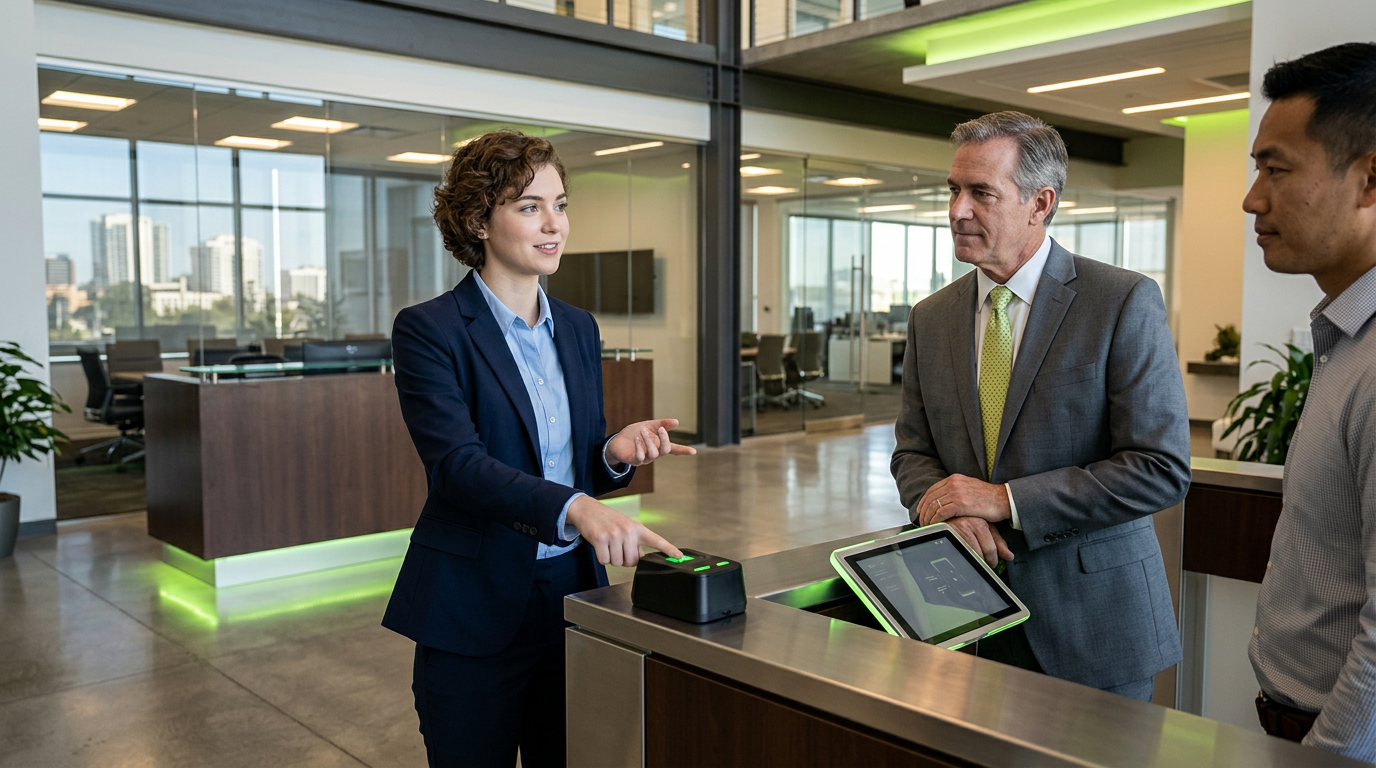
A high-end retail distribution center in Orlando recently faced a security nightmare that had nothing to do with a broken lock or a shattered window. A terminated employee had simply handed their proximity card to a friend before leaving the premises. Because legacy RFID cards don't know *who* is holding them—only that a valid token is present—the unauthorized individual walked straight through the loading dock at 3:00 AM.
The lesson was clear: In the modern security landscape, a credential that can be lost, stolen, or shared is a liability, not a safeguard.
As we head into 2025, Central Florida’s commercial sector—from hospitality hubs on International Drive to corporate offices in Downtown Orlando—is moving away from physical tokens in favor of biometric credentials. Here is why this shift has become the new industry mandate.
The Death of the 'Friendly Fraud' Loophole
In security terms, "friendly fraud" occurs when employees share credentials to clock each other in or grant access to restricted zones. For warehouses and healthcare facilities, this isn't just a management headache; it’s a massive compliance risk.
Biometric systems, including facial recognition, iris scanning, and fingerprint mapping, link the credential to the person’s biological identity. You cannot hand your face to a coworker. By moving to biometrics, businesses are eliminating the most common point of failure in any security system: the human tendency to bypass rules for convenience.
Solving the 'Card Management' Resource Drain
Ask any Facilities Manager in a large Orlando hotel or corporate campus about their biggest daily frustration, and they will likely point to keycard management.
- Constant Replacement: Cards are lost, demagnetized, or broken daily.
- Administrative Overhead: Printing, assigning, and deactivating physical cards takes hours of manual labor every week.
- The 'Visitor' Problem: Managing temporary badges for contractors and guests is a logistical bottleneck.
Modern biometric systems utilize a "registration once" philosophy. Once an employee is onboarded into the encrypted database, their access is managed via software. There is no inventory to track and no plastic waste.
The Technology Behind the Shift: Edge-Based Processing
One reason biometrics are surging in 2025 is the advancement in Edge Computing. Historically, biometric data had to be sent to a central server for verification, causing a lag at the door.
Today’s readers process the biometric template locally at the door (the "Edge"). This allows for sub-second verification. Furthermore, these systems no longer store actual photos or fingerprints. Instead, they store an encrypted mathematical string—a digital map of the user—ensuring that even if a database were breached, no usable personal imagery could be stolen.
Integration with Structured Cabling and IT Nets
A biometric shift isn't just about the reader on the wall; it’s about the infrastructure behind it. To support the high-speed data transfer required for modern facial recognition or high-resolution templates, businesses need robust Category 6 (Cat6) or Cat6A structured cabling.
At InCTRL Technology Services, we see that the most successful biometric rollouts are those where the security system is integrated into the broader IT ecosystem. This allows for:
- Automatic Lockdowns: Triggered via the network during an emergency.
- Real-time Tailgating Detection: Using AI-enabled cameras to ensure only one person enters per biometric scan.
- Time and Attendance Sync: Linking the door scan directly to payroll software.
Why Orlando Businesses are Leading the Charge
Central Florida is a unique market. Our high volume of seasonal staff in the hospitality sector and the rapid growth of healthcare tech in Lake Nona require security that is both scalable and foolproof.
In 2025, the mandate is simple: Security must be frictionless for the user but ironclad for the organization. Moving to biometric credentials achieves both. It removes the "I forgot my badge" excuse while providing the most accurate audit trail possible.
Is Your Infrastructure Ready?
Transitioning to a biometric access control system is a significant upgrade that requires careful planning of your network backbone and hardware choices. If your business is still relying on 125kHz proximity cards—technology that can be cloned with a $20 device bought online—it’s time to evaluate your roadmap.
The shift to biometrics isn't just a trend; it’s the closing of a loophole that has existed since the invention of the keycard. Is your facility ready for a more secure, card-free future?
InCTRL Technology Team
Commercial integration specialists with 20+ years installing security, cabling, signage, AV and IT systems across Central Florida. About us
Explore our services
Areas we serve
Need This Done at Your Facility?
Orlando-based since 2004 — 3,300+ jobs completed. Talk to a real technician, not a call center.